
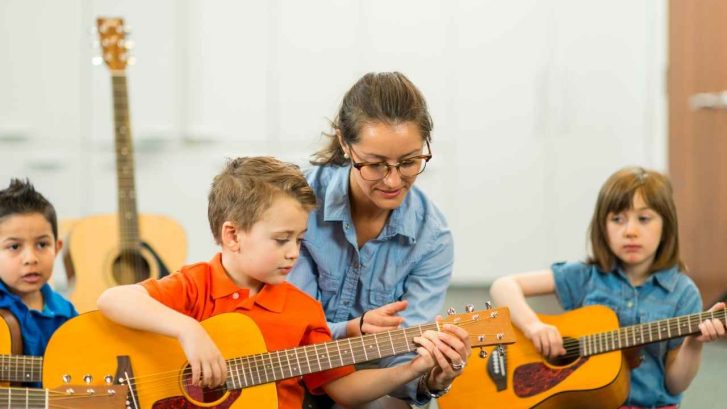
Introducing a child to the world of music, especially through learning the guitar, opens up a host of developmental benefits that extend well beyond the initial thrill of strumming their first chord. The journey of learning to play the guitar can profoundly impact a child’s cognitive abilities, social skills, and academic performance.
Cognitive Development
When children begin to learn guitar, they’re not just memorizing tablature or chords; they’re also enhancing their cognitive functions. Engaging with music requires a level of attention and memory that is comparably higher than many other activities. For instance, reading music involves translating written notes and rhythms into hand movements and sounds, a complex process that exercises the brain extensively. This musical training sharpens the mind, improving a child’s ability to concentrate and enhancing their memory retention over time.
Moreover, guitar playing nurtures problem-solving skills. Each new song or piece presents its own set of challenges, from mastering difficult finger placements to interpreting musical expression. Kids learn to overcome these hurdles by thinking critically and creatively, skills that are transferable to academic and real-world scenarios. Creativity especially gets a boost as children experiment with different sounds and styles, exploring their musical tastes and expressive capabilities.
Social Benefits
Beyond the cognitive leaps, learning the guitar can significantly bolster a child’s social skills. Music is inherently collaborative, and playing the guitar often involves group practice and performances. This environment encourages children to work cooperatively, listening to others and playing in sync, which fosters effective teamwork and communication skills.
Moreover, performing in front of an audience, whether at a school recital, family gathering, or on a larger stage, provides a unique platform for kids. It teaches them to handle visibility and pressure, boosting their confidence. The applause following a performance is a great morale booster too. As they express themselves through music, children not only gain confidence in their musical abilities but also in their personal voice and identity, which is crucial during the formative years.
Academic Achievement
Parents and educators might wonder how music relates to better performance in non-musical subjects. Studies have shown that children who engage in music education tend to achieve higher in areas like mathematics, reading, and languages. The discipline of learning and practicing guitar can translate into improved academic discipline. Music involves rhythm and structure, which can parallel mathematical skills, while reading music can enhance literacy as it involves decoding and comprehension.
Additionally, the disciplined practice required to learn guitar teaches children invaluable life skills like time management and patience. They learn to set practice schedules, stick to them and slowly improve over time. This routine and persistence pay off in academic settings as well. A child accustomed to regular practice may find it easier to set aside time for homework and study, approaching it with the same diligence as their music practice.
Emotional and Psychological Benefits
The emotional advantages of playing guitar can’t be overstated, especially for young minds developing their sense of identity and place in the world. One of the immediate benefits children experience is stress relief. Strumming a guitar after a long school day provides a soothing outlet, offering a way to unwind and express emotions in a safe and controlled environment. It’s a personal space where kids can explore their feelings through the music they play, whether they’re crafting joyful tunes or channeling more somber tones.
This emotional exploration through music also promotes better mental health. By expressing themselves, children can communicate feelings they might not otherwise articulate, reducing anxiety and improving their overall emotional well-being. Moreover, achieving musical milestones—such as mastering a difficult song—builds a sense of accomplishment. This feeling of success is a powerful motivator and can elevate a child’s mood and self-esteem, reinforcing their belief in their abilities and potential.
Furthermore, playing the guitar can be a grounding activity. It requires present moment awareness, similar to mindfulness exercises, which can help children decrease symptoms of stress and increase their emotional resilience. As they focus on their playing, they learn to stay connected with the moment, a skill that’s valuable throughout life.
Long-term Advantages
Looking toward the future, the benefits of guitar playing extend far into adulthood. For many, guitar skills can become more than just a hobby; they develop into lifelong passions or even careers in music. But even for those who don’t pursue music professionally, the guitar remains a valuable companion, offering personal fulfillment and a creative outlet throughout life.
Another significant long-term advantage is the development of cultural appreciation and awareness. Guitar music spans a variety of styles and cultures—from classical and jazz to rock and folk. As children explore these genres, they gain an appreciation for the rich diversity of global music traditions, which fosters a broader understanding and respect for different cultures. This cultural literacy is an essential component of being well-rounded in today’s global society.
Moreover, the discipline and persistence required in learning to play the guitar instill habits that are beneficial in all areas of life. Regular practice teaches children how to manage their time effectively and pursue long-term goals, traits that are directly transferable to educational pursuits and future careers. They learn that persistence pays off, a lesson that can make all the difference in their personal and professional lives.
Learning to play the guitar also offers networking opportunities. Musicians often find themselves part of communities that can provide support and open doors in various aspects of life, including career opportunities. Being connected to a community of like-minded individuals can be incredibly rewarding and lead to lifelong friendships and collaborations.
Building Life Skills
Learning guitar does more than just teach children music; it equips them with essential life skills that have far-reaching implications. Time management is a critical skill that young guitarists develop early on. Balancing school, homework, and guitar practice teaches them how to prioritize tasks and manage their time effectively. This skill alone can make a significant difference in all areas of their lives, ensuring they can handle the pressures of daily tasks with ease.

Furthermore, the resilience developed through mastering a musical instrument like the guitar cannot be overstated. Every musician faces challenges, whether it’s a difficult piece or a performance that didn’t go as planned. Learning to bounce back from these setbacks builds a strong sense of resilience that children carry into adulthood. This resilience becomes a backbone for facing life’s challenges head-on, with the confidence that they can overcome them.
A Tool for Lifelong Joy
Finally, the joy of playing guitar often turns into a lifelong passion that provides a continuous source of happiness and fulfillment. Many guitarists continue to play well into their later years, finding solace and enjoyment in their music. The guitar becomes a constant companion, a source of comfort and expression that enhances quality of life.
Moreover, the skills and experiences gained from playing the guitar often inspire other creative and professional pursuits. The confidence, discipline, and creativity fostered by musical training can lead to success in nearly any field, from arts and sciences to business and education.
Children Guitar Lessons From The Pro’s
The Ballet Centre Dubai offers exceptional guitar lessons for children, combining a nurturing environment with expert instruction to foster musical growth. Their comprehensive curriculum is designed to develop both technical skills and a deep appreciation for music, ensuring a well-rounded learning experience. With a commitment to personalized attention, the Ballet Centre Dubai stands out as the premier destination for young aspiring guitarists.
Conclusion
So, if you’re considering a meaningful activity for your child, think about guitar lessons. Not only will they gain a skill that brings joy and music into their lives, but they’ll also develop a strong foundation of cognitive, social, and emotional skills. The guitar can be a powerful tool in shaping a successful, resilient, and fulfilled individual. Why not let your child strum their way to success? It might just be the tune they were destined to play.