Welcome to the world of ballet—a dance form renowned for its grace and technical precision. If you’re just stepping into your ballet shoes, mastering the basics is your first leap toward becoming proficient in this classic art. This guide will walk you through the essential beginner ballet moves, giving you a solid foundation to build upon.
Ballet Terms and Meanings: The Language of Dance
Before mastering the moves, it’s essential to learn ballet’s vocabulary—a French-rooted language that defines every step and position. Key terms like plié (to bend), tendu (to stretch), and relevé (to rise) aren’t just words; they’re the building blocks of technique. Understanding these terms will help you follow instructions in class and connect movements with precision. As you progress, you’ll discover how terms like arabesque (a poised one-legged balance) and glissade (a gliding step) translate into the graceful storytelling ballet is known for.
Understanding Ballet Foundations
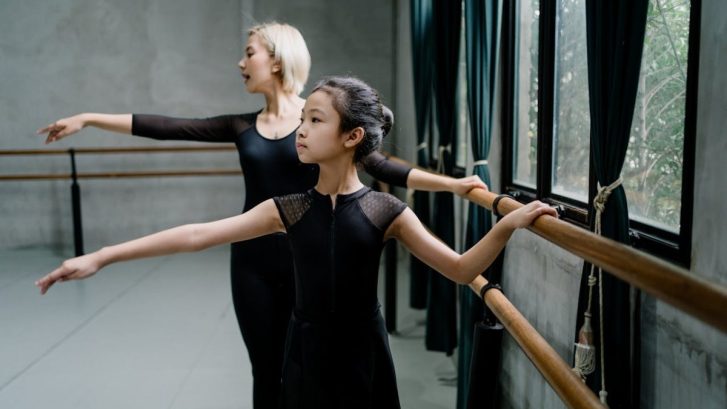
Ballet isn’t just a dance; it’s a language spoken through movements that convey stories and emotions. For beginners, appreciating the structure of a ballet class can significantly enhance learning efficiency. Classes typically start at the barre, where dancers practice basic exercises before moving to the center, where they perform without support. This progression not only helps in building strength and technique but also instills discipline, a quality as crucial as physical agility in ballet.
Ballet Warm-Up Exercises
Before you dive into ballet footwork or attempt any positions, warming up is crucial. Skipping this step can lead to injuries, and that’s the last thing you want. A good warm-up routine begins with gentle stretches to loosen your muscles. Start with neck rolls, shoulder shrugs, and arm circles to release tension in your upper body. Progress to leg stretches and gentle bends. Not only do these exercises prepare your muscles and joints for the strains of ballet, but they also set the stage for a session where body awareness is paramount.
After stretching, incorporate some basic Pilates or yoga moves into your routine. Exercises like the plank, downward dog, or even simple leg lifts improve your core strength, balance, and overall body alignment. These qualities are vital as they form the basis of all ballet movements. Remember, each exercise should be performed with the utmost care to form and posture, setting a high standard for the training session ahead.
Basic Ballet Positions
Once your body is warmed up, it’s time to tackle the basic ballet positions. These foundational stances are crucial; think of them as your ABCs in the language of ballet.
First Position
Start by placing your heels together, toes pointing outwards making a wide angle. Your arms should be rounded with the palms facing inward, as if hugging a giant beach ball. This position teaches balance and alignment.
Second Position
From first, step your feet apart (about a foot or so), still keeping your toes pointing out. Arms extend to the sides, curved slightly, strong but graceful. This position enhances your sense of space and lateral balance.
Third Position
Here, one foot crosses in front of the other, heel to arch. Arms remain curved—one held overhead, the other extended forward. Third position is less commonly used but serves as a good stepping stone to more complex positions and movements.
Fourth Position
Move your front foot about 12 inches forward from third, toes pointing out. One arm is overhead, the other in front with both curved. This position challenges your balance and prepares you for fluid motion in dance sequences.
Fifth Position
Bring your front foot to meet the back foot, heel to toe. Both arms are rounded above your head, closing the circle. This position demands a high degree of discipline and control as it forms the basis for many turns and elegant poses in ballet.
Each position requires careful attention to form—misalignment can lead to habits that are hard to break and can hinder your progression in more advanced techniques.
Ballet Footwork for Beginners
Now that you’re familiar with the basic positions, let’s transition into actual footwork, which brings the dance to life. Understanding and mastering these initial steps will pave the way for more complex sequences as you progress.

Plie
This is essentially a ballet squat. Starting in first or second position, bend your knees over your toes, keeping your heels on the floor as long as possible. The plie is foundational for almost every jump in ballet, helping to absorb shock and provide power.
Tendu
From any of the five positions, slide your foot out along the floor until it is fully extended with only the toes touching, then slide it back in. Tendus train foot articulation, a critical element for fluid, graceful movements.
Glissade
This is a slide rather than a step. Start in fifth position, plie slightly, then glide one foot to the side, followed by the other, to land softly in fifth again. It’s a connecting step that teaches you to move smoothly and maintain poise between more dramatic movements.
Pas de bourrée
This involves a sequence of steps usually executed in three parts: back, side, front. It’s a staple in choreographies for navigating small distances elegantly. Start with the right foot behind, step onto it, bring your left foot to the side, and then step your right foot in front. Reverse the order for the opposite direction.
These steps might seem minor, but they are building blocks for all ballet choreography. Practice them slowly and deliberately, focusing on precision and fluidity. As your confidence grows, so will your ability to execute these steps with the effortless appearance that ballet is known for.
Core Ballet Movements and Sequences
After mastering basic footwork, integrating core ballet movements into sequences can begin. These are more about the artistry of ballet—the expressive movements that often captivate audiences.
Arabesque
In this position, balance on one leg while extending the other behind you at hip height, toes pointed, creating a beautiful long line from your fingertips down to your toes. Your arms can vary in position, but typically one arm extends forward and the other aligns with your leg. The arabesque tests balance and strength and is fundamental for developing a dancer’s center.
Échappé
This jump involves moving from a closed position (like fifth) to an open one (like second) and back again. It’s a lively movement that helps build leg strength and agility. Start with a plie in fifth, then jump and slide your feet out to second, landing with soft knees, and then spring back to the starting position.
Relevé
Literally meaning ‘raised,’ this involves rising onto the balls of your feet (demi-pointe) or full pointe for more advanced dancers. You can perform relevé from any position, and it’s essential for developing calf strength and stability.
By integrating these movements into sequences, you begin to see how individual elements blend into the fluid dance that ballet is celebrated for. For instance, a simple combination could start with a plie, transition into a tendu to the side, move into an arabesque, and finish with a graceful échappé. Each sequence teaches transitions and how to maintain grace under the physical demands of dance.
Building a Practice Routine
Consistency is key when it comes to mastering ballet. Establishing a regular practice routine not only sharpens your skills but also deepens your understanding of the dance. Start with setting a specific time each day for your ballet practice. This helps create a habit and a rhythm, making it easier to stay committed.
Begin every session with a thorough warm-up to prepare your body, focusing on stretches that enhance flexibility and exercises that strengthen your core and legs. This preparation is crucial in preventing injuries and ensuring your body can handle the physical demands of ballet.
After warming up, spend significant time at the barre. Here, you’ll practice the basic positions and fundamental footwork you’ve learned. This repetition is vital; it reinforces muscle memory and helps refine your technique. As you become more comfortable with the basics, gradually introduce more complex combinations and sequences, pushing your limits but always mindful of maintaining proper form.
Once you’ve covered technique practice, devote some time to learning and rehearsing choreographies. This is where you can apply the moves and combinations you’ve practiced into fluid, expressive dance sequences. It’s also a chance to inject some creativity into your routine, experimenting with different expressions and emotional deliveries through your movements.
Finally, end each session with a cool-down. Gentle stretching helps relax your muscles and reduce soreness, ensuring you’re ready for your next practice. Reflect on what went well and identify areas where you might need more focus next time, setting goals for your upcoming sessions.
Conclusion
Mastering the basics of ballet is a journey that involves patience, persistence, and a lot of practice. Whether you’re dreaming of taking the stage or simply looking to embrace the art form as a new hobby, remember that every dancer started where you are now. Keep pushing your limits, practicing regularly, and embracing each new challenge with an open heart.
And if you ever feel stuck, remember: every plié and tendu takes you one step closer to your dance goals. So, lace up those ballet shoes, hit the barre, and let’s dance our way to grace and finesse. Ready to take the next step in your ballet journey? Keep practicing, and maybe I’ll see you at the barre!