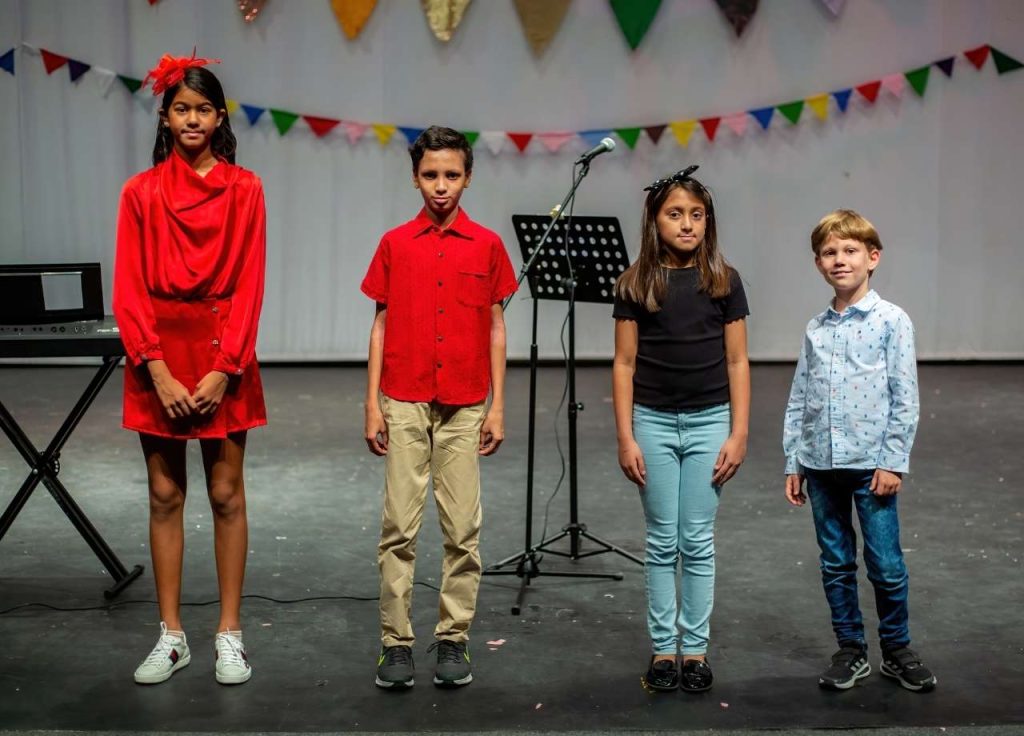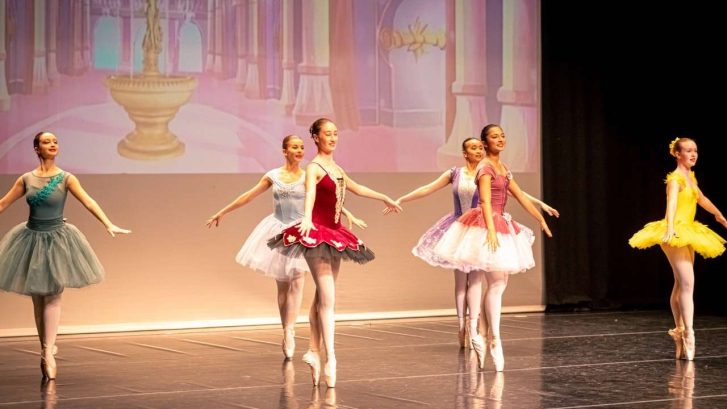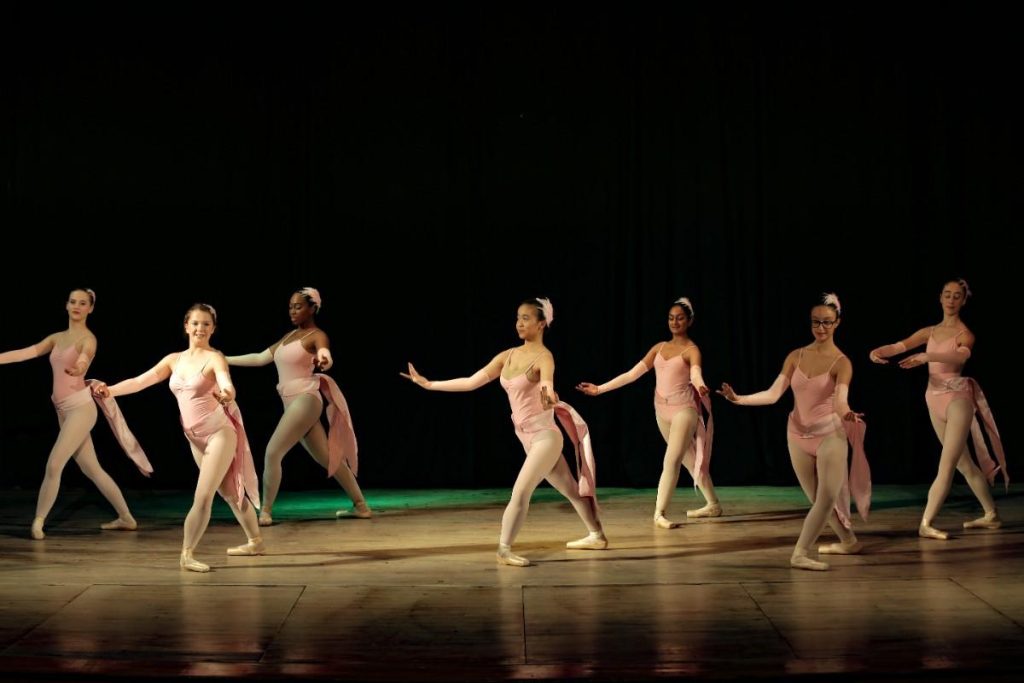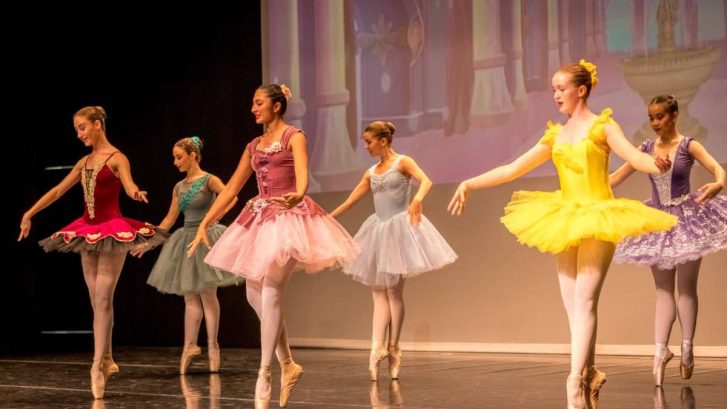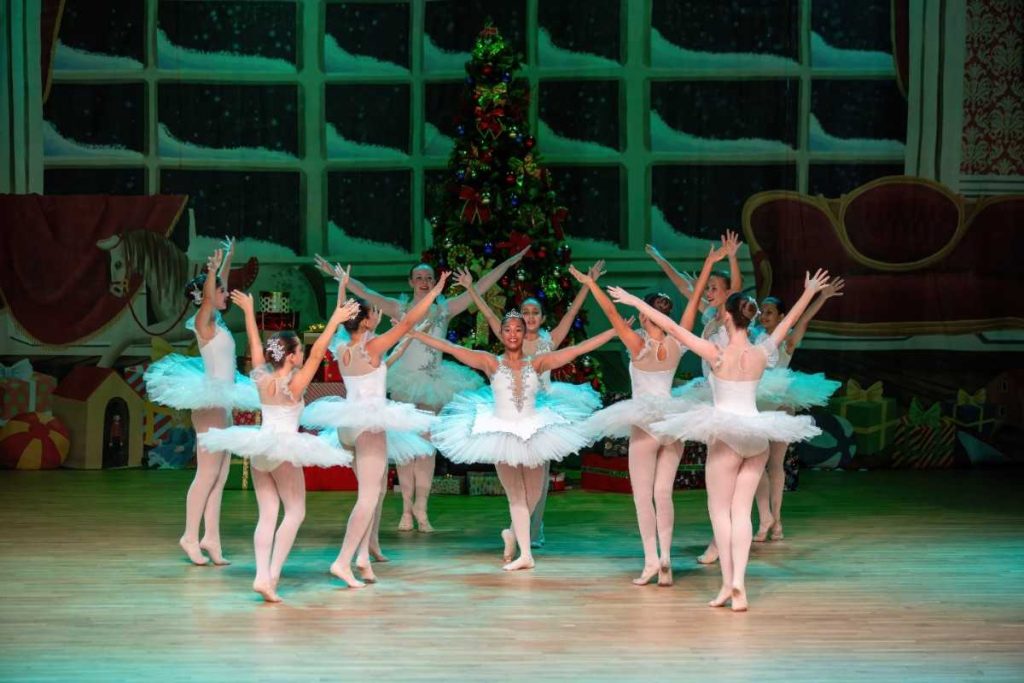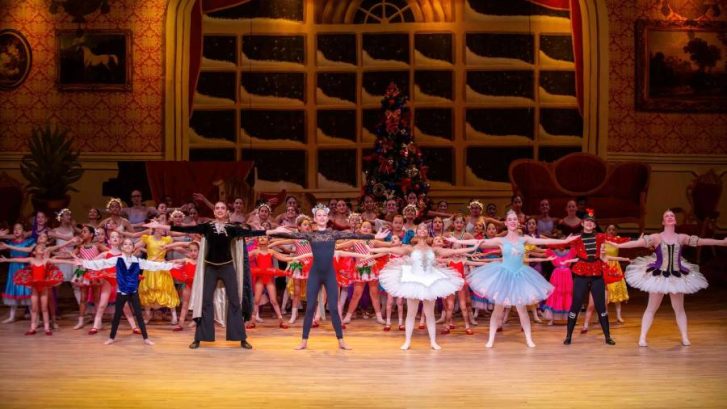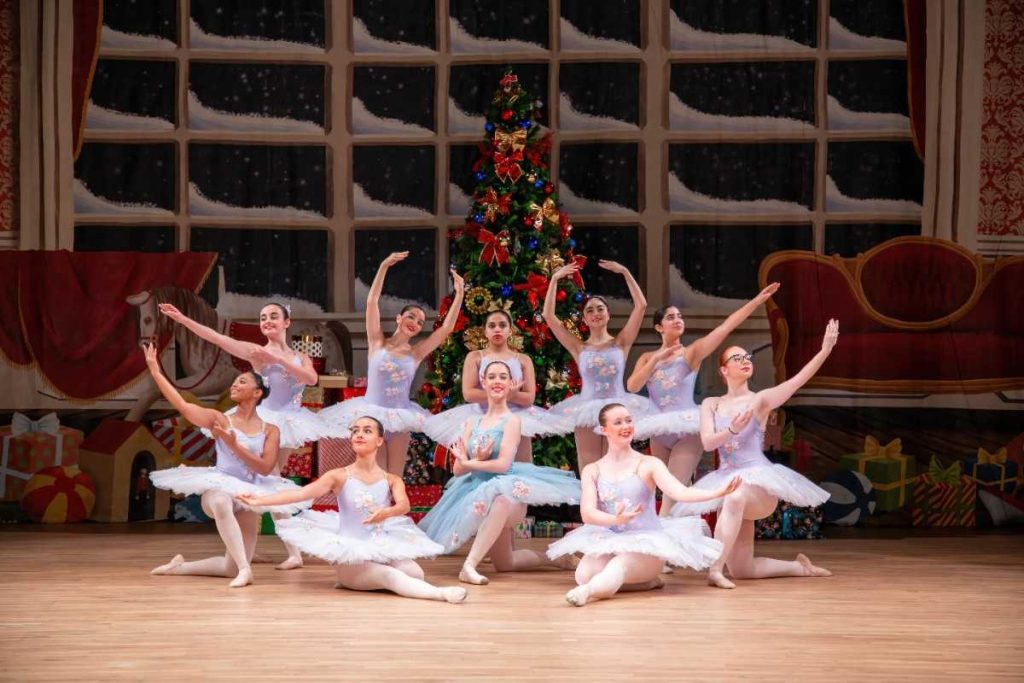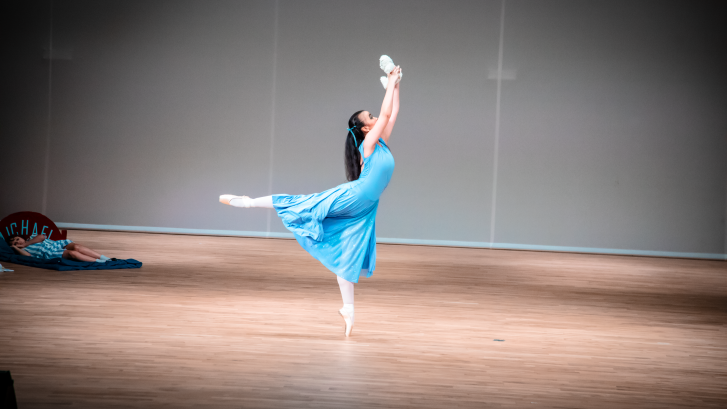
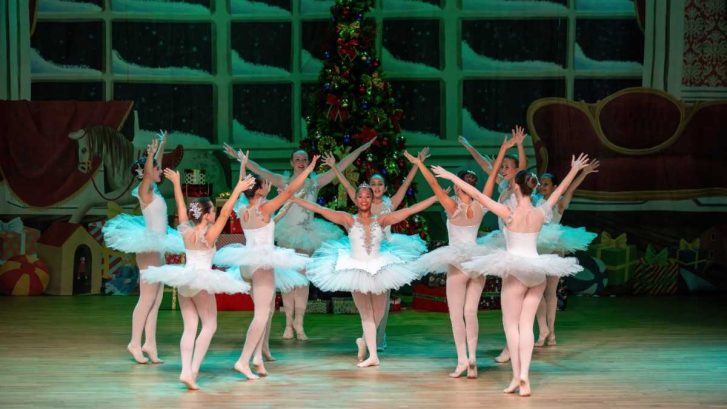
Children performing a ballet recital on stage

9 Benefits of Children’s Ballet Classes

Children don’t need a packed schedule or the latest tech to thrive—they need movement, focus, expression, and community. Ballet offers all of that in a way that feels like magic to a child. The discipline and elegance of ballet aren’t just for the stage—they shape who a child becomes. Whether your child is tiptoeing into their first plié or dreaming of grand jetés across the stage, ballet opens up far more than dance steps.

Here’s how ballet becomes a foundation—not only for graceful movement but for lifelong growth.

Confidence That Stays With Them

A young dancer might begin their first class hiding behind a parent’s leg, but week by week, they start to stand a little taller. They remember their movements, they listen to cues, and they begin to realize, “I can do this.” That feeling becomes internalized. Ballet doesn’t just teach children to perform—it teaches them to believe in their ability to overcome discomfort, improve, and show up fully.

That quiet pride after a class well done—especially when they’ve pushed through a tough rehearsal—is something many parents mention when they see their children grow in ballet.

Physical Strength and Coordination

Ballet strengthens muscles in a way that’s balanced and safe. From strong ankles to stable cores, children develop a keen sense of their physical ability through precise, age-appropriate exercises. It’s not just about posture or turnout—it’s about learning how their body moves through space and how to control that movement with intention.

At Ballet Centre Dubai, instructors trained in the Royal Academy of Dance (RAD) curriculum ensure that every plié and tendu is both technically correct and developmentally sound. This builds strength without pressure, allowing children to grow naturally into their physical power.

Focus and Discipline (Without Pressure)

One of the quiet wonders of ballet is the way it teaches discipline without harshness. Children learn to wait their turn, to listen for musical cues, to adjust their arms just so—all without ever feeling like they’re being disciplined. The structure of a ballet class does this work gently and consistently.

Kids begin to understand that progress comes from repetition. They start to crave the precision of a well-done combination. That focus often spills over into their schoolwork, helping them stay attentive and calm when it counts.

A Safe Outlet for Big Feelings

Children don’t always have the words for what they feel—but they do have their bodies. Ballet becomes an emotional outlet without ever needing to label it as such. The act of dancing, even within structured choreography, gives children the space to express, to release energy, and to embody feelings they might not understand.

Some parents say they see a shift in their child’s mood after class—lighter, more open, more centered. That’s no accident. Movement clears emotional clutter. And in a welcoming studio with trusted instructors, kids feel safe doing just that.

Artistic Appreciation Begins Early

Children who study ballet begin to recognize beauty in small details—a curved arm, a graceful leap, a soft finish. Their artistic sensibility sharpens, not just through watching professional performances but through participating in the art themselves. They learn to appreciate music, rhythm, costume design, and storytelling through movement.
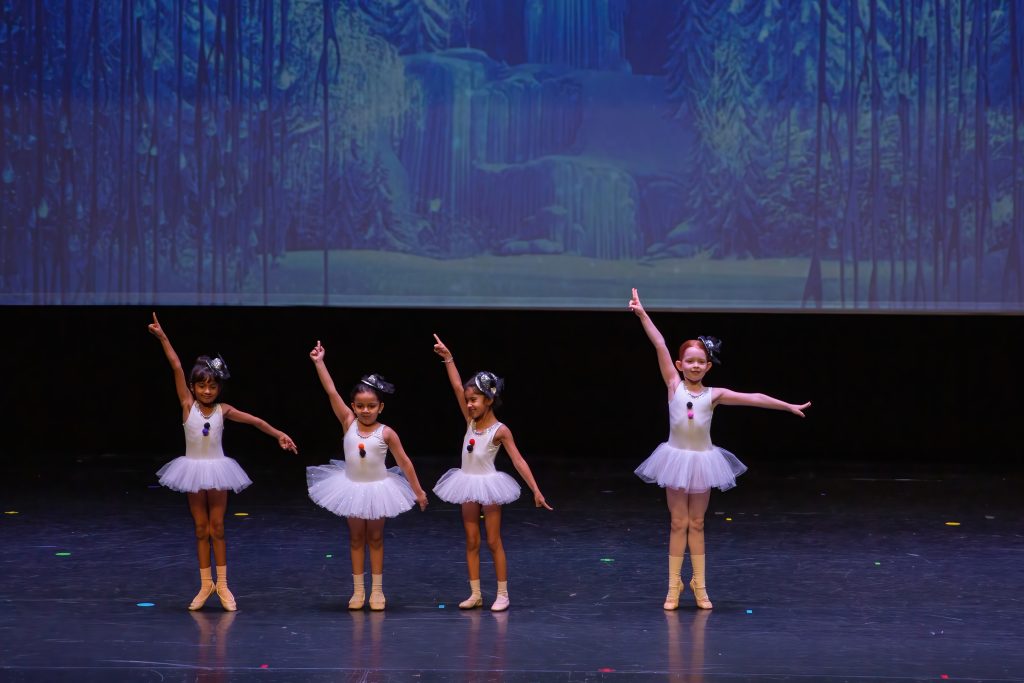
Children doing ballet on stage

Drama, music, and visual arts often go hand in hand with ballet. At centres that offer interdisciplinary classes—including Trinity drama and ABRSM music programs—young dancers can explore their full creative range.

Friendship and Social Skills

Ballet brings children together in ways that encourage cooperation rather than competition. They stand in lines, hold formations, and learn to move in harmony. That physical collaboration builds an unspoken bond. Over time, students begin to cheer one another on, offering help and encouragement without prompting.

Friendships formed in ballet are often rooted in shared goals and mutual respect. Especially in multi-level studios, younger dancers often look up to older students, creating a kind of quiet mentorship that’s heartening to watch unfold.

Resilience Through Routine

Ballet isn’t learned in a day. Children get used to not mastering something the first—or even tenth—time. They stumble, they reset, they try again. That pattern becomes familiar, and eventually, reassuring. Mistakes aren’t humiliations—they’re just part of how ballet works.

Children who embrace this rhythm of effort and improvement tend to build emotional resilience without realizing it. They stop fearing failure. They begin to see themselves as capable learners, not perfect performers. That mindset sticks, long after the leotards are folded away.

Healthy Habits for a Lifetime

Regular ballet classes create structure in a child’s week. They begin to associate movement with enjoyment. They stretch, hydrate, eat well before class—and these habits, introduced early, often grow into adult patterns.

Because ballet develops the body evenly, with attention to posture, balance, and strength, it reduces the risk of early sports injuries. Kids stay active in a way that feels purposeful and gentle, avoiding the burnout that can come from more aggressive programs.

Parents at Ballet Centre Dubai often mention how their children develop a natural awareness of how they feel physically, whether it’s tension in their shoulders or the energy they gain from a good class. That awareness lays the groundwork for body respect, not just body image.

A Quiet Sense of Joy

Ask a child after their first ballet class what they liked best, and the answers are rarely what you’d expect. “I liked the way my feet made that brushing sound.” “I liked the music.” “I liked when we flew with our arms.” It’s in these tiny details that the joy of ballet lives for children.

It’s not about performance or approval. It’s about the pleasure of movement, the comfort of repetition, and the thrill of doing something beautiful with their own bodies.

Ballet may be structured, but within that structure, there’s space for magic. The giggles in warm-up, the moment a student finally nails a balance, the quiet clapping after a class dance—they all add up to something deeply joyful.

Ballet doesn’t promise perfection. What it offers is far better: a graceful foundation for growth. From discipline to creativity, physical health to emotional expression, ballet meets children where they are and guides them gently toward who they’re becoming.

At Ballet Centre Dubai, programs in RAD ballet, ISTD Modern, drama, and music lessons are taught with care and expertise in a warm, KHDA-approved setting. Whether you’re exploring a free trial class or looking for a long-term path, there’s room to begin beautifully.
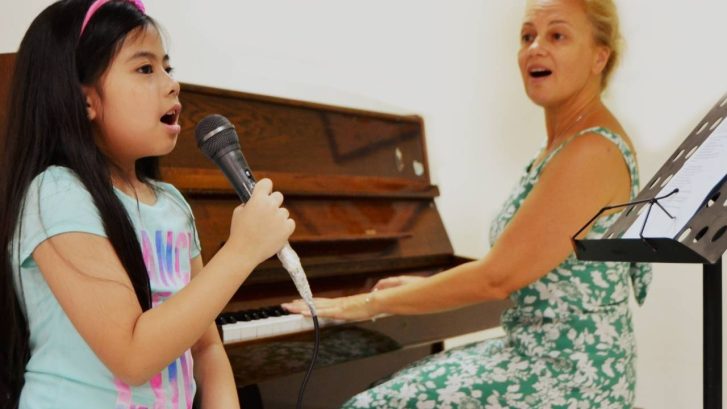
how to find vocal range

Importance Of Knowing Your Vocal Range As A Singer

Understanding your vocal range isn’t just about hitting the right notes. It’s about knowing where your voice feels most natural, expressive, and free. Singing outside your range can cause tension, fatigue, and eventually damage. Working within your natural capabilities lets your voice shine, encourages growth, and builds lasting confidence.

Vocal Categories as Guiding Tools

Most singers fall into several general vocal categories: soprano, mezzo-soprano, alto, tenor, baritone, or bass. These aren’t limitations; they are reference points. They help vocal coaches design exercises, recommend repertoire, and tailor lessons that respect the singer’s physiology. A well-matched song can unlock a performance that feels effortless.

Too often, students imitate famous singers without knowing those artists belong to entirely different vocal types. Mimicking Adele when you’re a soprano, or trying to belt high notes as a baritone, sets up unrealistic expectations and technical problems. Identifying your range keeps your voice healthy and your musical choices grounded.

How Do You Know Your Vocal Range

So, how do you know your vocal range? The most reliable method is to work with a vocal coach who can guide you through scales on a piano, identifying the very lowest note you can sing clearly to the very highest, whether in your chest voice or head voice. You’ll look for the point where your voice feels effortless and resonant, not strained or breathy. While online apps can offer a starting point, a trained teacher provides the nuanced listening needed to accurately map your unique vocal landscape, distinguishing between what you can physically hit and what is truly sustainable and healthy for your instrument.

Spotting the Sweet Spot in Children

Parents watching their children sing often notice a moment of magic: a note rings out clean and strong, and their child lights up. That kind of moment usually happens within their ideal vocal range. Their face relaxes, posture opens up, and the voice resonates.

This is what teachers are looking for when working with young singers. When a student constantly sings outside their range, frustration builds. Songs feel harder than they should. But with guidance, the right match between voice and material can transform a child’s musical journey.

Practical Support at Ballet Centre Dubai

Vocal teachers at Ballet Centre Dubai incorporate range discovery early in training. Through guided warm-ups, song trials, and careful listening, they map each student’s most comfortable notes. This informs everything from daily exercises to exam preparation for their different syllabi.

Personalized instruction helps students avoid common pitfalls, like pushing chest voice too high or skipping over transition notes. It also means students spend more time feeling capable, which improves both motivation and retention.

Confidence Through Clarity

Uncertainty about vocal range leads many students—children and adults alike—to assume they “can’t sing.” But often, the real issue is mismatched material. A mezzo-soprano trying to sing soprano arias may sound off, not because she lacks talent, but because the notes don’t sit comfortably in her voice.

Knowing where your voice naturally rests can make all the difference. Technique improves, pitch stabilizes, and breathing becomes more efficient. With clarity comes confidence. And confidence turns effort into enjoyment.

Growth Without Injury

Over time, vocal range can expand. But trying to force that too early leads to strain or even injury. It’s common to see singers who stretch their limits day after day, convinced that perseverance alone will increase their range. But the voice, like any instrument, needs conditioning—not punishment.

Students at Ballet Centre Dubai are taught how to grow safely. This includes building head voice strength, connecting registers, and mastering breath control. With time, those who start out with limited range often surprise themselves with their progress.

Group Singing and Range Awareness

Understanding your range isn’t only helpful for solos. In choirs, musicals, or ensembles, it determines where your voice fits. Blending becomes easier, harmonies more cohesive, and your presence more confident.

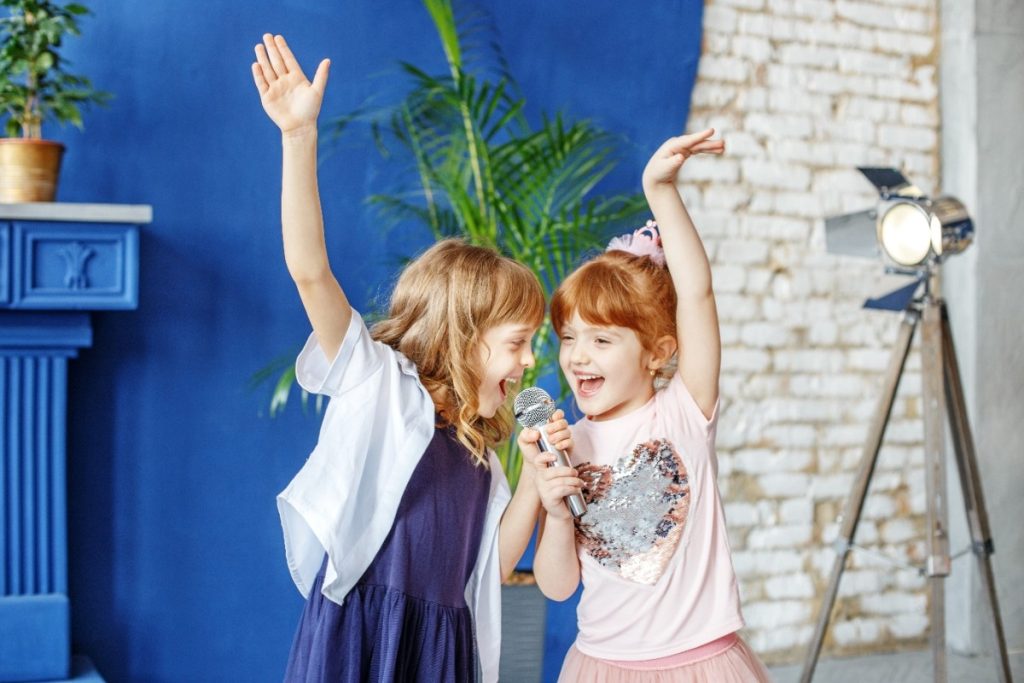
Two little funny children dance and sing a song together

This matters especially in school productions and youth choirs, where assigning parts by guesswork can lead to burnout or discouragement. Knowing your category helps directors place singers more effectively, ensuring the best experience for everyone.

Adults Rediscovering Their Voices

Many adults walk into their first vocal lesson with years of doubt behind them. Some have been told they can’t sing, others have simply never tried. But once they sing a few scales and find their range, something clicks. Their voices don’t sound strained anymore. Notes land cleanly. Songs feel reachable.

It’s often an emotional experience. Years of frustration melt into curiosity. As technique builds and tone improves, even reluctant students start to enjoy practice. The process is rewarding—and for many, therapeutic.

Making the Most of Trial Classes

One of the easiest ways to start this process is with a trial class. These sessions offer a low-pressure way to explore your voice, ask questions, and get initial feedback. At Ballet Centre Dubai, trial classes are often the moment when young singers first experience structured support. Teachers note vocal tendencies, suggest songs, and begin to guide students toward their best sound.

It’s not about being the best singer in the room. It’s about finding your voice, then learning to use it with confidence and care.

Repertoire Matters

Once you know your range, song selection becomes far more enjoyable. Singers can focus on storytelling, emotion, and technique, rather than wrestling with unreachable notes. Musical theatre students benefit especially from this, as roles are often written with very specific vocal ranges in mind.

Matching the right piece to the right voice unlocks performance quality. A baritone delivering a well-suited solo will always connect more with an audience than a tenor struggling to reach low notes.

A Long-Term Foundation

Young students who discover their range early build vocal strength on a stable foundation. They avoid habits that are hard to break later, like speaking too high, singing from the throat, or forcing tone.

More than technical gains, they gain a sense of musical identity. They understand what makes their voice unique. This awareness feeds into every future lesson, audition, or performance.

Letting the Voice Lead the Way

Every singer has a natural range. It’s shaped by anatomy, age, and experience. But it’s not fixed forever. With care, that range can grow—but only when it starts from a place of awareness. Knowing your range allows your voice to lead, rather than be forced.

Whether you’re a student stepping into the music room for the first time, or a parent looking to support your child’s passion, this simple discovery can be a turning point. The voice becomes not just an instrument, but a source of joy, expression, and confidence.

Smiling Girl Speaking To Microphone Performing for Parents

Head Voice vs Chest Voice: What’s the Difference?

The smooth, resonant quality of a singer’s voice often reflects how they use two main vocal registers: head voice and chest voice. When listeners hear a warm, grounded tone, that’s the chest voice at work. When they notice brightness and clarity in higher notes, that’s the head voice. Understanding the distinction and learning how to blend these registers can open new dimensions in vocal performance—bringing control, expression, and stamina to every song.

What Defines Chest Voice

Chest voice refers to the lower part of your vocal range. The name comes from the physical sensation of vibration in the chest when producing these notes. If you speak normally or hum in a deep range, you’re using chest voice. It provides fullness and richness—ideal for conveying emotion and delivering powerful vocal moments.

Vocal cord function: In chest voice, the vocal folds are thicker and come together more firmly.

Sound quality: The tone is robust and resonant, capable of carrying strong emotions or storytelling elements.

Usage scenarios: Common in ballads, lower-register pop, folk songs, and dramatic pieces with grounded warmth.

Educators often concentrate on strengthening chest voice to ensure lower and middle-range singing remains solid. Exercises that promote consistent breath flow, like gentle sustained notes on open vowels, help singers maintain support and resonance without strain.

What Defines Head Voice

Head voice occupies the upper range of the vocal register. Singers describe a light, ringing sensation around the skull or sinuses. This register allows access to higher notes with clarity and brightness—often creating an ethereal or soaring quality.

Vocal cord function: In head voice, vocal folds thin out and come together with lighter contact.

Sound quality: The result is a lighter, more flute-like tone—ideal for passages requiring reach and finesse.

Usage scenarios: Frequently used in classical arias, pop choruses, softer ballads, and pieces demanding delicate high notes.

Training head voice involves gentle slides through scales (sirens), gradually extending the range upward while keeping the tone smooth and unrestricted. Attention to breath placement—feeling expansion around the ribcage and upper torso—helps maintain control and projection.

Why Both Matter

There will be times songs demand the earnest strength of chest voice, and others require the shimmer of head voice. Singers with flexible voices use both, weaving them together naturally across a melody. It’s not always a straight progression—sometimes head voice can dip into mid-range territory.

What captivated me about this blending was when a teacher encouraged me to “mix” a pop chorus so my middle notes didn’t crack or sound tinny. That mix voice isn’t another distant concept—it emerges when we connect chest and head, creating a bridge between two registers. You gently let the chest relax and invite in the head resonance.

Practical Tips—From Feel to Sound

1. Surface Awareness: Place a hand on your chest and hum low; feel that vibration. Then slide up, noticing the shift of sensation above your collarbone.

2. Gentle Sirens: Glide from low to high and back using “woo” or “mum.” Track how your voice transitions naturally. If you feel strain, lighten the sound or adjust your posture.

3. Posture and Support: Try standing tall, shoulders relaxed, notice your ribs lifting slightly as you inhale. Think of the breath reaching into your ribs and gently supporting your voice.

4. Vowel Adjustment: High vowels (“ee,” “ay”) can feel tight—try modifying them slightly (“ih”, “eh”) for comfort in head voice.

5. Bridge Work: Use songs that straddle your mid-range and work through the chords slowly. Sing at half volume to feel where the two registers meet, and see if you can ease through it.

A Real-Life Example

A former student of mine was preparing a musical theater audition. She had a strong chest voice but struggled in the upper range. We worked on sirens and breath support, then tackled the song slowly. Over time, she began blending, her middle voice flowing into her top notes with warmth instead of cracking. It became one of the most rewarding moments I’ve witnessed as a teacher—watching her confidence rise as her voice did the same.

4 children on stage

Where Learning Happens

Finding proper guidance makes this journey smoother. Ballet Centre Dubai offers various music lessons ideal for all types of vocal students. The structured lessons and qualified instructors there help young singers layer solid technique, posture, and musical understanding while exploring their full vocal range. One trial session can give a feel for how support tools blend technique with natural expression.

Voice Health and Awareness

A healthy voice is respectful of its limits and strengths. Neither register should be pushed or forced. If notes feel strained, those are signals to pause, rest, or revisit breath. Speaking or singing comfortably outside lesson time—exercising but not exhausting—helps maintain flexibility and prevents fatigue.

Hydration, gentle warm-ups, and proper rest are essential. Singers I’ve worked with who maintained daily humming routines, tea, and easy breathing exercises kept their voices agile through performances and rehearsals. If any discomfort persists, a voice specialist can offer tailored exercises or identify issues before they worsen.

Building Confidence With Every Note

Over time, mastering both chest and head voice enhances other areas—pitch accuracy, tone colour, emotional expression, and performance presence. It changes how you interpret songs, phrase passages, and interact with an audience. From storytelling ballads to soaring anthems, the flexibility between registers anchors emotion while adding nuance.

For parents pondering how to support their child’s singing growth, focusing on healthy technique early can make a real difference. Weekly lessons that incorporate posture, vocal exercises, proper repertoire and performance guidance create space where a young voice can bloom safely.

Final Thoughts

Chest voice and head voice aren’t opposing forces; they’re partners. Chest voice offers warmth and depth, head voice adds clarity and elevation. Blending brings harmony, control, and freedom. The most memorable performances are those where the singer floats between registers as naturally as breathing.

Ultimately, singing is personal—what matters is exploration, patience, and genuine curiosity about your voice. Head versus chest is a tool, not a limit. As you play with registers, sense connections, and shape phrases, you discover new possibilities.

Your voice is yours. Give it permission to explore both floors of its “house”—build the foundation in the chest, then open up the attic in the head. You might just find a new room where your truest expression lives.

ballerinas performing on stage

5 Ballet Foot Positions You Must Know

Learning ballet begins from the ground up—literally. The five basic foot positions are the foundation of classical ballet technique. These simple-seeming stances define balance, alignment, and fluidity in every movement. They are the first thing a dancer learns and the last thing they ever truly master. Whether you’re watching a young child in their first class or a seasoned performer in a grand jeté, those foot positions are quietly at work.

First Position: Where It All Begins

Feet turned out, heels touching. The first position is iconic. It looks easy, but it teaches dancers more than just how to stand. Children begin by understanding how to place their feet, but soon realize it’s also about posture, turnout, and core control. Instructors often emphasize how the entire leg rotates from the hip rather than forcing the feet to turn.

You may notice teachers reminding students to avoid letting their arches collapse or their knees roll forward. That’s because alignment is everything. First position encourages dancers to lengthen their spines, engage their abdominals, and hold themselves with quiet dignity. Even very young dancers pick up on these cues and begin to carry themselves differently.

One eight-year-old student recently shared, “I used to trip a lot, but now I feel like I float when I walk.” It’s a small comment that reveals a big shift—not just physically, but mentally.

Second Position: Creating Space and Stability

From first, we open the heels about a foot apart, keeping the turnout. Second position introduces stability and spatial awareness. It’s used frequently in center exercises and is essential for learning pliés and grand battements.

The wider base helps children understand how to distribute weight evenly. This is often the first position where students begin to feel their balance improve. Teachers might guide students to imagine pressing the floor away with their feet or reaching their arms out like they’re holding a beach ball. These ideas connect physical action to visual storytelling—a hallmark of early ballet education.

Second position also lays the groundwork for jumps. Many leaps and transitions pass through this position, giving it both technical and artistic importance. Dancers begin to learn how power can be gathered without losing grace.

Third Position: Introducing Opposition and Coordination

Here, one foot slides in front of the other so that the heel of the front foot touches the arch of the back foot. It’s less frequently used in professional choreography but is a staple in beginner classes. It offers a more manageable alternative to the complex fifth position while still introducing coordination between the legs.

Third position begins to challenge children’s understanding of oppositional movement. They have to keep both hips squared while aligning the legs in a precise pattern. It’s more complex than it appears. Teachers often mark progress not by perfect execution, but by the way a child begins to self-correct—adjusting their stance or re-aligning their arms without prompting.

This position also starts the journey into turning. Pirouettes and other spins often begin in third or fourth, depending on the method being taught. Learning how to rise from this position helps students understand balance under pressure.

Fourth Position: Depth and Control

Fourth position builds on third but requires more control. One foot moves forward about a foot’s length, staying turned out. The back foot remains in place. It’s the first position where dancers begin to feel off-center, and that’s intentional.

little girls in ballet attire performing on stage

The space between the feet can feel awkward at first. Teachers often remind students to keep their hips level and avoid letting their back arch. This is where core strength becomes visibly essential. A child learning fourth position may stumble or shift at first, but over time, they begin to build stability.

This position is often used in preparation for pirouettes and lunges. It asks dancers to trust their center of gravity while building leg strength. One teacher once compared it to standing on a train platform—”You know where you are, and you’re ready to move when it comes.”

Fifth Position: Precision and Poise

Fifth position is elegant, narrow, and demanding. The heel of one foot is placed directly in front of the toe of the other. It requires excellent turnout, solid balance, and exact alignment. This is the position most often seen in performances because it creates beautiful lines.

Younger students don’t always reach a perfect fifth immediately. Instead, they start by aiming for clean alignment. Teachers gradually guide them to close the gap between their feet while maintaining rotation from the hips. One common image is to imagine zipping up the legs from the heels to the inner thighs.

Fifth position is also where dancers build the stamina for repetition. Whether it’s tendus, fondues, or petit allegro combinations, this position demands endurance. The smallest shift can throw off the whole shape, so dancers learn to stay alert and aware of every muscle.

Why These Positions Matter More Than You Think

These positions do more than train the body; they shape how young dancers think, feel, and grow. A child might not realize it immediately, but learning to stand tall, balance on two feet, and execute a clean plié builds more than dance ability.

It fosters patience. Progress takes time. Muscles develop slowly, and alignment comes with repeated practice.

It cultivates respect. Ballet asks for discipline, but also rewards commitment. Children learn to listen closely, support their peers, and celebrate small victories.

It encourages expression. Even within the structure of a position, dancers bring their own flair. A confident first position says something. A focused fifth speaks volumes.

Teachers use all kinds of creative tools to bring these lessons to life. Storytelling, props, visual cues, and music are all part of the experience. One teacher at a recent trial class turned the floor into a garden path, with each position as a stepping stone. The children didn’t just learn steps; they went on a journey.

Bringing It All Together

At The Ballet Centre Dubai, students begin their training with these five positions as the cornerstone. Through Royal Academy of Dance (RAD) syllabi and nurturing instruction, the Centre provides a space where children can safely explore movement and develop confidence.

Parents looking to support their child’s physical and creative growth often appreciate the Centre’s holistic approach. With KHDA approval, experienced faculty, flexible payment options, and the chance to try a class before committing, families can feel assured in their decision. The journey may start with placing the feet just so, but it soon grows into something much more meaningful.

Watching a child move from first position to a graceful pirouette from fifth is a moment of pride. But behind the scenes are hours of quiet learning, gentle corrections, and personal breakthroughs. These foundational positions become part of how a young dancer stands, walks, and carries themselves into every new stage of life.

adult ballet female ballerinas in colored tutu's dancing on stage

What To Expect In Adult Ballet Classes

The first time I walked into an adult ballet class, I didn’t know where to stand. The mirrors were intimidating, the barre looked like something I had no business touching, and the room was filled with people who all seemed to know what they were doing. But something told me to stay. Maybe it was the quiet music in the background, or the way the instructor greeted me with a nod and a gentle smile before cueing the first plié.

That class changed the way I saw movement, discipline, and even my own body.

Adult ballet isn’t about perfection. It’s about progress — and grace, both internal and external.

Starting Point: No One Cares What You Look Like

Everyone feels awkward at the beginning. You’re not alone. Most adult ballet classes are a mix of former dancers, total beginners, and people who just want to try something new. The atmosphere is surprisingly relaxed — yes, there’s structure, but there’s also an understanding that people have day jobs, stiff joints, and varied fitness levels.

There’s often a quiet agreement among classmates: we’re here for ourselves. Not for competition, not to perform. Just to move, breathe, and reconnect.

What Actually Happens in Class

Classes usually start at the barre. That’s where you’ll learn the fundamentals — pliés, tendus, dégagés — with one hand supporting your balance. You’ll work on posture, turnout, and building strength from the ground up. The barre becomes a place of focus, almost meditative.

Then you’ll move into center work. That means learning to balance without support, combining steps into short sequences, and eventually trying some gentle jumps or traveling steps across the floor. It’s not about high kicks or pirouettes in the early days. It’s about control and clarity.

Don’t be surprised if your brain works as hard as your muscles. Ballet vocabulary is in French, and combinations are often given verbally. You’ll learn to pick up patterns, remember sequences, and respond to musical cues — all while keeping your posture aligned and your arms flowing with intention.

You Will Be Sore, But It’s a Good Sore

Muscles you forgot existed will wake up. Your feet, calves, and core in particular. You might walk funny after your first few sessions, but give it a week or two and that stiffness will give way to strength. Adult ballet classes build muscle tone, flexibility, and balance in a way that’s low-impact but effective.

You’ll also build stamina, not just physically but mentally. Concentration improves, especially during combinations that challenge your coordination and memory. It’s part physical, part brain game, and surprisingly satisfying.

Wear What Makes You Comfortable

There’s no pressure to show up in a leotard and tights unless you want to. Most adult beginners wear leggings, a fitted top, and ballet flats. Some bring a skirt or wrap for a touch of elegance. What matters is that you can move freely and see your form.

Shoes matter, though. Invest in proper soft ballet flats, usually canvas or leather. They help your alignment, protect your feet, and make movement easier. Most studios will guide you on how to fit them correctly.

The Mental Shift: From Self-Criticism to Self-Respect

One of the biggest surprises is how ballet changes your inner dialogue. Adults often enter class carrying years of self-judgment — about appearance, coordination, or the feeling that it’s “too late” to learn something new. But over time, you start to celebrate small victories. Holding a balance longer than last week. Remembering a sequence. Stretching a bit deeper. There’s something quietly powerful about standing tall in fifth position, knowing you’re doing something just for you.

Community Without Pressure

A group of ballet dancers in white dancing on stage

Adult classes have a different energy from youth or pre-professional groups. The pace is steady, instructors are encouraging, and there’s a mutual respect among participants. You’ll often find people from different walks of life — teachers, engineers, parents, artists — all coming together for the same hour of focused movement.

It’s not unusual for friendships to form. A nod of encouragement across the room, shared stretches after class, maybe even a coffee nearby afterward. There’s connection without the need to perform or impress.

Progress Happens — Gradually, Steadily

In adult ballet, progress isn’t about jumping higher or turning more times. It’s about moving with more clarity, feeling your alignment improve, and gaining confidence in your own expression. Some students do reach performance level and enjoy participating in studio recitals or workshops. Others just keep showing up weekly, enjoying the quiet satisfaction of learning something challenging and beautiful.

Classes typically follow a syllabus or structured progression, and studios often offer options for beginners, improvers, and intermediate levels. That way, you’re always working at the right pace — not rushed, not held back.

Where It Can Lead

Many adults who start ballet discover new interests along the way. Some try complementary styles like contemporary dance or jazz. Others pursue music or drama classes, realizing how deeply connected the performing arts are. At Ballet Centre Dubai, adult students often explore these additional paths — from drama workshops to music theory — all within the same nurturing environment.

The best part? You can bring your kids along, too. Many parents discover ballet by watching their children and decide to join an adult class themselves. It becomes something of a family experience — shared passion, mutual encouragement, and a deeper appreciation for the discipline behind the art.

Final Thoughts From the Barre

You don’t need a dance background. You don’t need to be flexible. You don’t need to have perfect posture or a dancer’s body.

All you need is the willingness to try.

Adult ballet is about reclaiming movement, grace, and discipline in a way that fits into your life now. It’s about discovering how much your body can do — and how good that can feel. You might surprise yourself. You might fall in love with the process.

And the next time someone mentions ballet, you won’t think of it as something distant or unreachable. You’ll think of the class you go to on Tuesday nights, the barre you rest your hand on, the music that cues your movement, and the quiet pride that comes from showing up, week after week.

A gtoup of dancers on stage performing

Need To Rent A Ballet Studio? Your Rental Guide

A mother recently walked into our reception, notebook in hand and a determined look on her face. “My daughter needs more space to practice,” she said. “Her RAD exam is coming up, and our living room just won’t cut it anymore.” She’s not the only one.

Renting a ballet studio used to be something only choreographers or instructors worried about. Now, it’s parents, dance students, fitness coaches, and music teachers looking for flexible, professional spaces where practice isn’t limited by furniture or flooring. If you’ve been considering studio rental but aren’t quite sure what to expect—or how to start—this guide is here to help you make a confident, informed choice.

Why Rent a Studio At All?

Home practice can only go so far. Whether it’s pirouettes that need room to travel, pointework that demands the right kind of flooring, or musical rehearsals that simply shouldn’t echo through the kitchen walls, having the right space can make all the difference. A rented studio offers uninterrupted time, professional-grade amenities, and a focused atmosphere. No barking dogs. No shifting the coffee table.

Studios aren’t just for dancers preparing solos. They’re also perfect for taekwondo coaches teaching private sessions, drama students rehearsing monologues, or parents helping their children refine music exam pieces.

What Makes a Good Rental Studio

There are a few things you’ll want to check before booking a space:

Flooring Matters:

For ballet and modern dance, sprung floors are non-negotiable. They protect joints and reduce fatigue. Make sure the space doesn’t just look pretty—it needs to be safe.

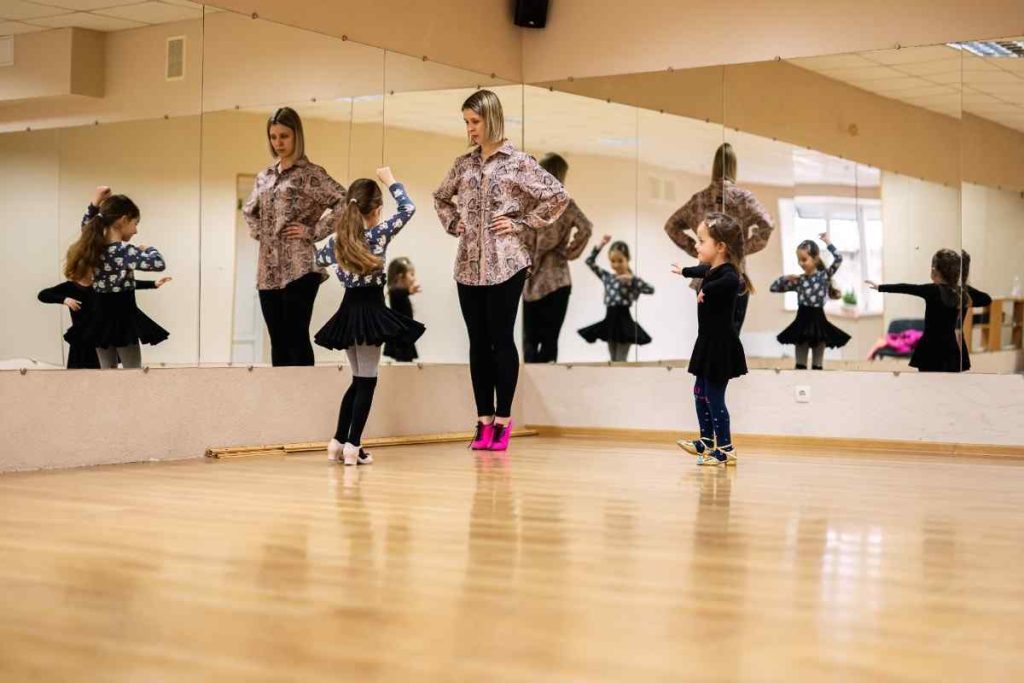
2 little girls being trained in modern dance by an older female teacher

Mirrors and Barres:

Essential for any dancer. Even a short rehearsal session becomes far more productive when your child can self-correct posture or alignment on the spot.

Availability and Flexibility:

Look for a venue that allows bookings by the hour or session rather than requiring a monthly commitment. Last-minute availability is a huge bonus, especially during exam season or before a performance.

Sound and Lighting:

If your child is working on a musical or drama piece, decent acoustics and adjustable lighting will go a long way in helping them feel stage-ready.

Cleanliness and Safety:

Studios used by children should maintain high standards of hygiene and safety. Check for regular cleaning schedules and make sure any equipment left around isn’t a tripping hazard.

Who’s Renting Studios—and Why

Private instructors often need space to run one-on-one sessions without distractions. Parents book studios to give their kids an environment where they can rehearse properly. Small performance groups rent space to run tech rehearsals or polish ensemble work. There’s also a rising number of professionals who use studio time for low-impact fitness classes, stretching, or even meditation.

One father recently booked two hours every weekend so his daughter and her violin coach could work without interruptions. He mentioned how the peaceful space helped her focus in a way she never could at home.

Booking Tips from People Who’ve Done It

Keep a Regular Slot: If you find a time that works—say, every Friday afternoon after school—try to lock it in weekly. This avoids the mad scramble of trying to reserve last-minute.

Talk to the Admin Team: They often know which time slots are least busy, or when cancellations are likely. You might score a quieter time or even a discount for off-peak hours.

Share the Cost: For group rehearsals or small classes, splitting the rental fee makes it much more affordable. One group of teen dancers rented a studio together to prepare for a school performance and rotated music responsibilities each week.

Bring the Right Gear: Whether it’s ballet slippers, tap shoes, or a drama script, being fully equipped helps you make the most of your time. One music student brings a portable speaker for backing tracks, and it’s made her practice sessions more dynamic.

How Ballet Centre Dubai Fits In

We offer hourly rentals for fully equipped studios with mirrors, barres, sprung flooring, and excellent lighting—ideal for dance, martial arts, or performance prep. Many parents already enrolled in RAD ballet, ISTD tap or modern, and music classes often rent space for extra practice as exam dates approach. It’s a natural extension of their commitment to their children’s development. Even students from outside the Centre have found our studios a great match for their goals.

When Renting Becomes More Than Just a Convenience

There’s something about stepping into a real studio, placing your dance bag by the mirror, and lacing up your shoes in silence that sets a different tone. It’s a shift—from home life to focus mode. For younger students, it’s often the first step toward taking their art seriously. One drama student began by booking 30-minute solo rehearsals. Now she coaches younger kids in monologues and rents the space for her sessions.

There’s also the emotional connection. Parents speak of sitting quietly in the corner, watching their child practice, seeing confidence grow with every turn and phrase. Renting a studio becomes part of their weekly rhythm, like piano lessons or taekwondo drills.

Costs and Value

Rates vary, but in most cases, you’re paying for access to professional space that would otherwise be out of reach. The real value is in the focus and productivity gained—something that’s hard to replicate at home or in public spaces.

Ask about flexible packages. Many centres offer discounts for block bookings or repeat customers. If you’re already enrolled in classes, you might even get priority access or member rates.

Who Should Consider It

  • Parents of serious young dancers prepping for exams or auditions
  • Private music and dance tutors looking for neutral ground
  • Small performing groups with limited rehearsal space
  • Students in need of focus time before assessments
  • Fitness instructors launching their own classes or workshops

Whether your child is preparing for music assessment, a drama audition, or an RAD ballet exam, renting a well-equipped studio can support their progress without the pressure of formal class settings.

A Final Note from Experience

One of our longtime families mentioned recently how renting the studio helped their daughter move from casual interest to consistent discipline. “It became her time,” they said. “She wasn’t just fitting ballet into her schedule—she was making room for it.”

Studio rentals offer more than a quiet space. They offer the chance to commit, to focus, and to grow. And sometimes, that’s exactly what a young artist—or their parents—needs most.

ballerinas in tutu's performing on stage

Modern Dance vs Ballet: Which Is Right For You?

The choice between modern dance and ballet isn’t always obvious. Both styles are beautiful, challenging, and enriching in different ways. Often, it comes down to what makes a child light up in the studio: structure or spontaneity, tradition or experimentation, control or creative release. As a parent or student, knowing the difference can help guide a decision that supports not just physical development, but personal growth.

The Grace and Structure of Ballet

There’s something timeless about ballet. From the very first plié at the barre, students step into a world that prizes discipline, technique, and beauty in form. Every movement is intentional. The back must be straight, the feet turned out, the arms held just so. It’s a practice that trains the body and the mind equally, with a focus on control, alignment, and attention to detail.

Children who thrive in ballet often enjoy routine. They like knowing what to expect in class, and they respond to correction with determination. Many take joy in refining a single movement for weeks until it feels second nature. Progress is measurable, especially with structured programs like the Royal Academy of Dance (RAD) syllabus, which is taught at Ballet Centre Dubai. Regular assessments and exams give young dancers milestones to work toward, helping them build confidence through achievement.

Ballet also sets the stage for performance. Classical pieces like The Nutcracker or Swan Lake become more than stories—they become goals. Students work toward recitals and showcases that highlight not only their skill, but their dedication. And in every arabesque or grand jeté, there’s a reminder of how far they’ve come.

The Freedom and Emotion of Modern Dance

Modern dance offers a different kind of space. It breaks away from ballet’s strict lines and instead invites dancers to move from instinct. There’s floor work, contractions, spirals, improvisation. Students are encouraged to experiment, to let emotion shape the way their bodies respond to music.

This style can be especially rewarding for children who are expressive and imaginative. There’s room for interpretation—no single way to perform a movement—and often, the choreography is built around themes or stories that reflect real emotions. Modern dance allows students to connect their inner world to physical movement in a way that feels personal and liberating.

Where ballet asks for refinement, modern dance welcomes rawness. That doesn’t mean it’s easier—it still requires strength, coordination, and a deep understanding of the body. But the focus shifts from precision to intention. This makes it appealing to students who want to move in a way that feels more intuitive or emotionally driven.

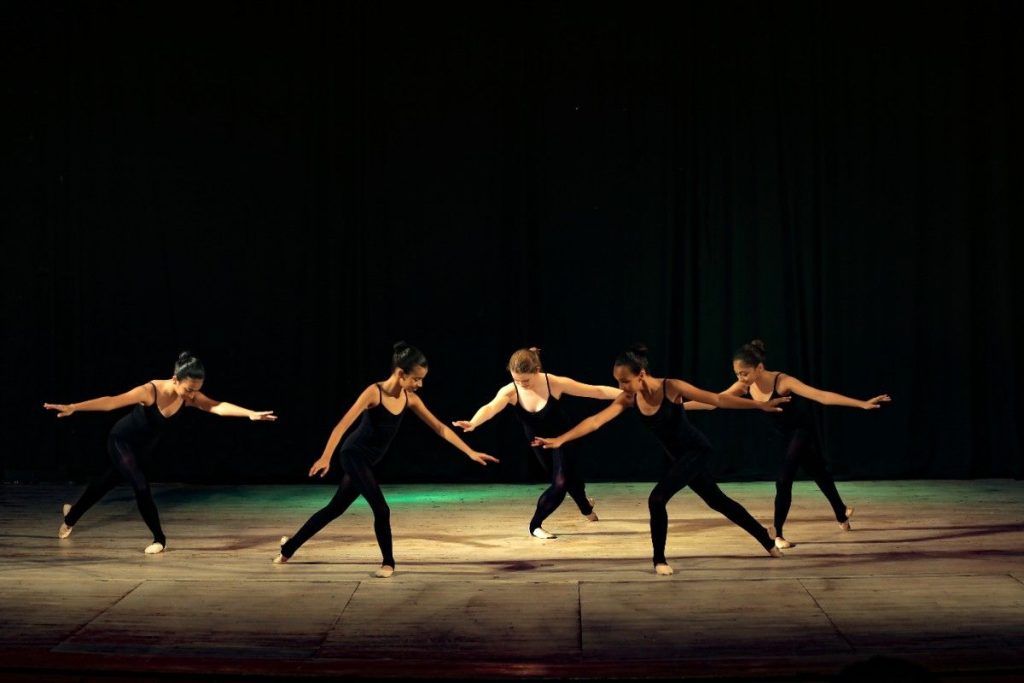
5 girls dancing on stage wearing all black

At Ballet Centre Dubai, modern dance classes follow the ISTD Modern syllabus, offering a balance of creativity and structure. Students build a foundation in technique while still having space to explore individual expression—something that resonates with those who feel boxed in by classical forms.

Which Style Matches Your Child’s Personality?

There’s no single answer to which is “better.” The more helpful question is: what kind of environment helps your child grow?

Does your child thrive on routine, discipline, and step-by-step progress?
Ballet might be a great match.

Do they enjoy experimenting, expressing emotions through movement, or storytelling through dance?
Modern may speak more to them.

Are they naturally graceful and focused?
Ballet will refine those traits.

Do they like to move freely and explore what their body can do in new ways?
Modern could be a better fit.

It’s also worth considering your child’s temperament. Some students appreciate ballet’s calm structure as a grounding force. Others come alive when they’re encouraged to move outside the lines and discover their own style. In many cases, students try both and find value in the contrast. The discipline of ballet can give structure to modern, and the creativity of modern can bring fresh life to ballet.

Skill Development in Both Styles

Both styles build strength, coordination, musicality, and spatial awareness. Ballet is unmatched when it comes to alignment, turnout, posture, and balance. These fundamentals can support any future training in dance or other sports. Modern dance, meanwhile, develops grounded movement, flexibility of the spine, and emotional connection to performance.

At younger ages, students often benefit from exploring more than one style. This cross-training approach can improve versatility and help students discover what truly excites them. At Ballet Centre Dubai, children have the chance to do exactly that. With trained instructors in both RAD Ballet and ISTD Modern, plus flexible trial options, families can make informed decisions without pressure.

How to Support Your Child’s Journey

As a parent, your encouragement matters more than whether your child chooses ballet slippers or bare feet. Let them explore. Watch their classes when possible. Ask what they enjoy and where they feel most comfortable. Growth in the studio isn’t always linear—it comes in moments of breakthrough, joy, and perseverance.

Trust their instincts. Sometimes they’ll be drawn to the elegance of a well-executed pirouette. Other times, they’ll want to throw themselves across the floor with abandon. Each path offers value. What matters most is that they’re moving, learning, and expressing themselves in a space where they feel safe and inspired.

If you’re still unsure which style might suit your child best, starting with a free trial class can be a helpful step. The chance to experience both ballet and modern firsthand can offer clarity that no article or advice can fully provide.

Modern dance and ballet each offer powerful opportunities for personal and artistic development. The choice isn’t about picking a winner—it’s about finding a match. Whether your child finds joy in the structured elegance of classical ballet or the expressive energy of modern dance, what matters is that their movement has meaning. The right class isn’t just about steps and technique—it’s about how those steps help a young person grow.

And sometimes, the best decision is simply to let them try, explore, and decide for themselves.

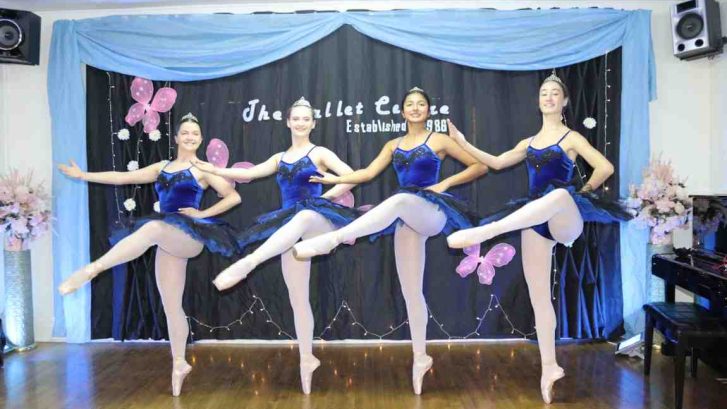
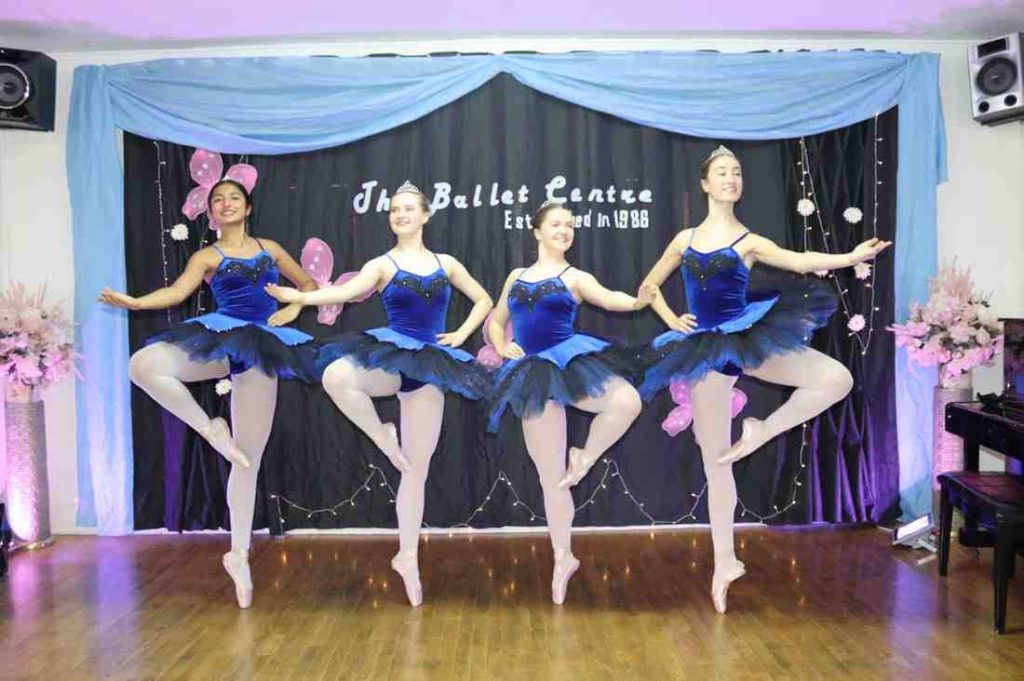
Four women wearing blue ballet attire with one leg up

How Different Factors Impact Your Ballet Technique

It’s often the smallest things that shape a dancer’s progress: a late dinner the night before class, shoes that pinch, a teacher who believes in them, or simply the temperature of the studio. Ballet technique doesn’t develop in isolation. It grows—or stalls—based on everything surrounding the student, from their habits at home to the environment where they train.

At Ballet Centre Dubai, we’ve watched students transform not just from excellent teaching, but from consistent support in areas parents might not always consider. If your child is training in ballet, understanding what influences their technique can make a noticeable difference.

Posture Starts Outside the Studio

It’s easy to think of posture as something corrected at the barre, but the habits children build in their day-to-day lives often follow them into class. Slouching over devices, heavy backpacks, soft couches—these shape the spine long before pliés do. A dancer who sits with awareness usually finds it easier to hold alignment during class.

Parents who encourage time away from screens, promote cross-legged sitting over slumping, or introduce activities like drama or music help their child develop better spatial and body awareness. These subtle habits feed into the way a dancer holds themselves both in and out of class. The Ballet Centre offers drama and music lessons that naturally support this kind of physical mindfulness—without your child even realising they’re working on their ballet foundation.

Muscle Memory Loves Routine

A once-a-week class will teach steps, but technique comes from repetition. The body learns through doing—not once or twice, but often. Children who dance several times a week usually show faster improvement in strength, control, and coordination.

Our students enrolled in both RAD Ballet and Modern or Tap through the ISTD syllabus often progress with noticeable steadiness. These disciplines reinforce each other: ballet builds the core, tap sharpens rhythm, and modern encourages fluidity. Together, they round out a dancer’s physical vocabulary.

We often suggest trial classes across styles so students can discover where they thrive—and parents can see firsthand how additional exposure strengthens ballet technique without overwhelming young dancers.

Sleep and Food Matter More Than You Think

A tired dancer can’t balance well. A hungry one won’t have the energy to jump or hold an arabesque. Nutrition and rest aren’t just general health tips—they directly affect turnout, stamina, and focus.

You can often spot a dancer who didn’t sleep enough: their muscles look sluggish, and turns become wobbly. One who skipped lunch might push through the first half of class, then fade when combinations get longer. We see this all the time, especially in afternoon and evening classes.

Simple routines at home—regular meals, water intake, consistent sleep—are quiet helpers to technical improvement. Ballet Centre Dubai supports this understanding by keeping classes age-appropriate in both length and schedule. Our staff are trained to observe when students need gentle redirection, or just a moment to catch their breath.

The Studio Vibe Changes Everything

Technique doesn’t thrive in a tense room. Students need to feel safe, encouraged, and open to correction. At Ballet Centre, we create an environment where children want to come back—not out of pressure, but genuine excitement. That emotional comfort leads to better risk-taking in technique: a dancer will only push for higher extensions or deeper pliés if they trust the space they’re in.

We’ve seen shy children blossom after just a few weeks, simply because they felt noticed and respected. The connection with a teacher can be a deciding factor in how quickly technique improves. Encouragement and accountability, delivered with warmth, often outweigh sheer repetition of exercises.

Growth Spurts and Physical Changes

Children don’t grow evenly. One term they’ll leap like gazelles, the next they can’t touch their toes. It’s not regression—it’s adjustment. The body has to recalibrate after each change in height, weight, or limb proportion.

Technique may appear to backslide during these transitions. A dancer’s coordination can dip when legs lengthen suddenly or feet grow a size. Teachers at Ballet Centre track these shifts and adapt training accordingly. What looks like a rough patch is often just the body learning its new dimensions.

Parents who stay patient during these phases—who don’t compare one child’s progress to another’s—make it easier for dancers to push through without discouragement. Ballet isn’t linear, and bodies don’t change neatly. But good instruction, paired with understanding at home, keeps students motivated even when their pirouettes feel off.

External Activities Can Help or Hinder

Not all sports or hobbies complement ballet. Football, for instance, can tighten the hips. Some forms of martial arts develop speed but not extension. On the flip side, disciplines like Taekwondo—offered at Ballet Centre Dubai through the ITF program—can enhance balance, discipline, and core control in ways that translate well to ballet.

Cross-training can be wonderful when it’s chosen mindfully. We’ve noticed students who also play a musical instrument tend to pick up rhythm and phrasing in choreography more quickly. Those who practice arts and crafts often have a better eye for details, which shows in their port de bras or finishing positions.

External Activities


Rather than overload schedules, it helps to select activities that speak to the body and mind in harmony with ballet training.

Confidence Grows With Performance

Technique often clicks when a dancer prepares for something. Exams, recitals, or small in-studio showings give a sense of purpose. Ballet Centre offers RAD and ISTD exams, along with annual performances, and even these short-term goals spark better focus in class.

We’ve seen students suddenly fine-tune their épaulement just weeks before a show—after months of half-hearted attempts. The reason? Motivation. The excitement (and nerves) of sharing their work pushes dancers to lock in corrections that previously felt abstract.

Parents who support their child through rehearsals—whether by attending, encouraging extra practice, or simply asking how class went—become part of the progress. Ballet isn’t only learned with the body; it’s learned with the heart.

Final Thoughts

The technique you see on stage or in class is never just the result of a well-taught plié. It’s shaped by the shoes a child wears, the food they eat, the mood they’re in, the sleep they had, and how safe they feel in the studio. Ballet Centre Dubai works hard to offer more than instruction—we create an environment where every element is geared to help students grow.

From free trial classes to KHDA-approved syllabi and flexible payment options, we make it easier for families to find the rhythm that works for them. When everything clicks—from home routines to the right teacher—technique becomes more than steps. It becomes something a dancer carries with pride, everywhere they go.

Female ballerinas surrounding one ballet dancer

The Evolution of Ballet: From Past to Present

Ballet has changed dramatically over the centuries. What began as an art form reserved for royalty has become a worldwide discipline, blending tradition with modern expression. The grace and discipline seen in today’s ballet classes trace back to an era when dance was as much about social status as it was about performance.

Origins in the Courts of Europe

Ballet traces its roots to the Italian Renaissance, where it was performed in noble courts as a display of refinement and cultural sophistication. The term itself comes from the Italian word ballare, meaning “to dance.” It was in these early years that dance masters began formalizing steps and patterns, though the movement was far removed from the highly technical performances seen today.

By the mid-16th century, ballet had spread to France, largely due to Catherine de’ Medici, an Italian noblewoman who married King Henry II of France. She brought Italian dance traditions with her, leading to the creation of elaborate court spectacles. These performances combined music, poetry, and dance, often lasting for several hours. Dancers were not professionals but members of the aristocracy, trained to move gracefully as a symbol of their status.

The turning point came during the reign of King Louis XIV. A passionate dancer himself, he played a significant role in shaping ballet as an art form rather than mere court entertainment. He founded the Académie Royale de Danse in 1661, a formal institution dedicated to training dancers and standardizing ballet technique. It was during this time that many of today’s foundational movements and positions were codified, ensuring that ballet had a structured technique that could be taught consistently.

The Shift Toward Theatrical Performance

As ballet moved from royal courts to public theaters, it underwent significant transformation. The 18th century saw a push toward greater expressiveness in dance, shifting from the rigid, ornamental style of court performances to a more fluid, theatrical approach.

Dancers began to perform in theaters rather than palace halls, and their movements became more sophisticated. Women took on a more central role, no longer just supporting figures but leading performers. Two dancers who helped shape this change were Marie Camargo and Marie Sallé. Camargo was known for her technical brilliance, shortening her skirts to showcase her footwork, while Sallé was praised for her ability to convey deep emotion through movement.

This period also introduced the concept of ballet d’action, which emphasized storytelling through dance. Choreographers sought to create more natural movement that connected with audiences, making ballet a more engaging and immersive experience.

The Rise of the Romantic Ballet

The 19th century saw ballet take on a dreamlike, ethereal quality. Stories of spirits, fairies, and mythical creatures became common themes, and dancers appeared to float effortlessly across the stage. This was largely due to the introduction of pointe shoes, which allowed ballerinas to rise onto the tips of their toes, creating an illusion of weightlessness.

Marie Taglioni, one of the most famous dancers of this period, became an icon through her performance in La Sylphide. She embodied the light, delicate style that defined the Romantic era. Costumes also changed, with longer, softer tutus replacing the heavy, structured dresses of the past.

Male dancers, who had once dominated the stage, found themselves in a supporting role as the focus shifted toward female performers. The ballerina became the symbol of ballet, often portraying fragile, otherworldly beings that seemed to exist outside the realm of reality.

Despite the beauty of Romantic ballet, it also had limitations. The emphasis on ethereal qualities sometimes restricted movement, keeping dancers bound to a specific aesthetic rather than allowing them to explore broader physical expression.

Classical Ballet and Russian Influence

By the late 19th century, ballet had become more technically demanding. Nowhere was this more evident than in Russia, where choreographers like Marius Petipa pushed dancers to new levels of precision and athleticism.

Petipa’s contributions to ballet remain some of the most celebrated today. His works, including The Sleeping Beauty, Swan Lake, and The Nutcracker, set the standard for classical ballet. These productions featured highly structured choreography, grand ensembles, and intricate partnering work that showcased both strength and artistry.

This era also introduced the shorter, stiffer tutu, designed to highlight the complexity of movement. Male dancers regained importance, performing powerful jumps and lifts that complemented their female counterparts.

Breaking Tradition: The Birth of Modern Ballet

The 20th century brought a wave of experimentation. Choreographers began to question the constraints of classical ballet, seeking new ways to use the body and tell stories.

Michel Fokine, a Russian choreographer, rejected the rigid structure of traditional ballet, advocating for more expressive and natural movement. His works encouraged dancers to use their entire body, breaking free from the highly stylized gestures of the past.

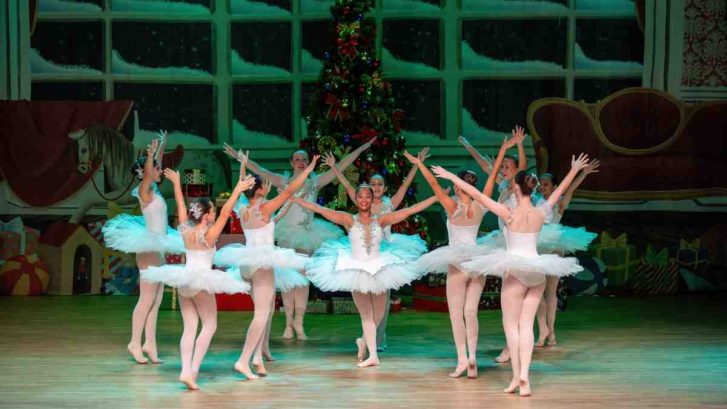
balletinas in a pose behind large christmas tree

Perhaps one of the most influential figures of this period was George Balanchine. He stripped ballet down to its purest form, removing elaborate costumes and sets to focus entirely on movement. His neoclassical style, seen in works like Serenade and Agon, emphasized speed, musicality, and precision.

Contemporary ballet also began to emerge, blending elements of modern dance with classical technique. Dancers explored new movement qualities—sometimes sharp and angular, other times fluid and grounded.

This shift expanded the possibilities of ballet, making it more accessible to a wider audience. While traditional ballets remained popular, modern works brought fresh perspectives, ensuring that ballet continued to evolve rather than remain frozen in time.

Ballet in the 21st Century

Today, ballet exists in many forms. Some companies remain dedicated to classical repertoire, while others push the boundaries of movement and storytelling. Technology has also played a role, with social media providing a platform for dancers to share their art with a global audience.

Training methods have evolved as well. Dancers now incorporate strength training, flexibility exercises, and injury prevention techniques into their routines. The focus is no longer just on aesthetics but also on maintaining long-term physical health.

At Ballet Centre Dubai, students receive a well-rounded ballet education that honors both tradition and innovation. The structured RAD syllabus ensures strong technical foundations, while additional classes in modern dance, tap, and drama allow students to explore different forms of movement and expression. Whether a child is taking their first ballet class or preparing for advanced exams, they receive expert guidance in a supportive environment.

Ballet has come a long way from its origins in royal courts. It has survived centuries of change, adapting to new influences while maintaining its essential beauty and discipline. For young dancers stepping into a ballet studio today, they are not just learning technique—they are becoming part of a tradition that has inspired generations before them and will continue to shape the future of dance.

ballet dancer wearing blue attire and standing on one leg

The Road to Ballet: Steps to Becoming a Dancer

A child’s fascination with ballet often begins in the simplest moments—standing on tiptoes in front of a mirror, twirling around the living room, or watching a performance with wide-eyed wonder. What starts as a playful curiosity can blossom into a lifelong passion when nurtured with the right training and support.

The journey from beginner to accomplished dancer follows a structured path. Ballet is built on discipline, repetition, and gradual mastery of movement. While natural talent plays a role, progress depends on consistency, patience, and expert instruction. For parents hoping to support their child’s love for dance, understanding the stages of development can make a significant difference.

Starting Young: Building the Basics

The best dancers begin training early, often as young as three or four years old. At this stage, classes are more about developing coordination, musicality, and a love for movement than mastering technique. The goal is to introduce children to the joy of dance without overwhelming them.

At Ballet Centre Dubai, our Pre-Primary and Primary ballet classes follow the Royal Academy of Dance (RAD) syllabus, ensuring that even the youngest dancers receive structured training. These early lessons focus on posture, flexibility, and rhythm, all essential for future progress.

Not every child who enjoys ballet at this age will pursue it professionally, and that’s perfectly fine. The discipline, grace, and confidence they gain will benefit them in countless ways, whether they continue dancing or not.

Commitment Grows with the Student

By the time a student reaches six or seven, their training becomes more structured. This is when they start learning formal ballet positions, barre work, and simple combinations. The challenge increases, but so does the sense of achievement.

Parents often notice a shift during this stage. Some children remain casual dancers, happy to attend class once or twice a week, while others become more focused, eager to improve, and willing to practice at home. For those showing serious interest, this is a good time to increase training hours and introduce additional styles, such as modern or tap.

At Ballet Centre Dubai, we offer ISTD Modern and Tap alongside ballet, allowing students to develop versatility. Modern dance helps with fluidity and expression, while tap sharpens musicality and footwork. These complementary styles can make a ballet dancer more well-rounded.

The Role of Exams and Performance

Ballet training isn’t just about attending classes—it’s about progression. One of the best ways to track improvement is through graded examinations. The RAD and ISTD syllabus include structured exams that allow students to demonstrate their skills and move to the next level.

Preparing for an exam requires dedication. Students must refine their technique, perfect their posture, and develop the ability to perform under pressure. It’s a valuable experience, teaching discipline, focus, and resilience.

Performing on stage is another crucial part of a dancer’s journey. Recitals, competitions, and productions give students the chance to experience the thrill of performing in front of an audience. This not only builds confidence but also teaches the importance of stage presence and artistry.

Ballet Centre Dubai organizes annual performances, giving students the opportunity to showcase their progress. For many, stepping onto the stage for the first time is a defining moment—the point where they truly feel like dancers.

Strength and Flexibility: More Than Just Technique

As training intensifies, physical conditioning becomes increasingly important. Strength and flexibility are the foundations of ballet technique. Without them, jumps lack height, turns lose control, and balance becomes a struggle.

A girl in a pink tutu jumping and posing in a ballet pose

Students dedicated to ballet often incorporate additional conditioning into their routine. Stretching exercises improve flexibility, while strength training helps develop the muscles needed for pointe work and advanced movements. Pilates, yoga, and specialized ballet conditioning classes can all be beneficial.

At Ballet Centre Dubai, we emphasize safe training, ensuring that students develop strength gradually. For those moving towards pointe work, our instructors carefully assess readiness to prevent injuries.

The Leap to Pre-Professional Training

Around the age of 12 or 13, serious students start to think about the next step. This is the point where ballet transitions from a hobby to a true commitment. Training hours increase, and expectations become higher.

This is also when students begin preparing for pointe work. Contrary to popular belief, going en pointe isn’t just about age—it’s about strength, technique, and readiness. Rushing this step can lead to long-term injuries, so careful assessment by experienced teachers is essential.

For those aiming for a professional career, attending intensive training programs or summer schools can be invaluable. These experiences expose students to new teaching styles, help them refine their skills, and introduce them to the discipline required for a career in dance.

The Role of Supportive Teachers and Encouraging Parents

Behind every great dancer is a strong support system. Teachers guide and mentor students, providing the training and encouragement needed to improve. Parents, meanwhile, play a crucial role in fostering perseverance and passion.

Supporting a child in ballet isn’t just about driving them to class. It’s about celebrating progress, helping them navigate challenges, and ensuring they maintain a healthy balance between dance, school, and rest.

At Ballet Centre Dubai, we create a nurturing environment where students feel supported. Whether a child dreams of dancing professionally or simply enjoys ballet as a creative outlet, our goal is to help them grow and thrive.

The Journey Continues

The road to becoming a dancer isn’t a straight path. Some students pursue ballet professionally, while others take different routes, finding joy in teaching, choreography, or other areas of the performing arts.

Regardless of where ballet leads, the discipline, grace, and resilience gained through training stay with a dancer for life. Whether taking their first steps in a beginner class or preparing for a professional career, every student’s journey is unique—and every step matters.

1 2 3 6