

Music and children go together like rhythm and beats. Introducing kids to music through guitar lessons can be a doorway to not only learning an instrument but also developing a profound love for musical expression. The guitar, with its appealing sound and hands-on playability, often emerges as a favorite among young learners. Its strings offer a tangible way for kids to feel the music they’re creating, making the experience both fun and educational.
The Psychological Benefits of Learning Guitar
When a child picks up a guitar, the benefits extend far beyond just learning to strum a tune. The process of engaging with music through a guitar can significantly boost cognitive functions. For instance, as they learn to read music and translate it into hand movements, they are enhancing their memory and concentration skills. This mental exercise can improve their ability to focus in other academic areas as well.
Learning an instrument like the guitar also offers children a unique way to express their emotions. It can be a healthy outlet for releasing the joys or frustrations of their day. As they progress and start playing songs they love or creating their own music, they gain a sense of accomplishment. This boost to their self-esteem can be particularly impactful during the formative years, where every small success builds their confidence.
Educational Advantages of Guitar Lessons
Incorporating guitar lessons into a child’s life also brings educational advantages that touch on various aspects of learning. The first, and perhaps most obvious, is gaining a grounding in music theory. Understanding the basics of notes, chords, and scales is akin to learning a new language—a musical one that enhances intellectual development.
Rhythmic skills are another crucial benefit. Playing the guitar requires a good sense of timing and coordination, skills that are transferable to many other areas of life and learning. Furthermore, exploring different genres and styles of music through guitar playing can broaden a child’s historical and cultural knowledge. From classical to rock, each style offers its own history and influences, providing a rich educational tapestry.
Social Impacts of Guitar Playing
Learning to play the guitar doesn’t just nurture a child’s individual skills; it also opens up a world of social opportunities. For young musicians, playing in a group, whether it’s a school band, a local music group, or simply jamming with friends, helps them understand the value of teamwork. This group interaction can enhance their ability to communicate and cooperate with others. It’s about taking turns, listening to each other, and blending their sounds harmoniously. These are valuable life lessons in understanding and respecting others’ contributions.
Moreover, regular guitar lessons and practice sessions offer a structured setting for receiving and giving feedback. Learning how to handle constructive criticism is an essential social skill, and it’s one that music lessons teach subtly and effectively. Kids learn to take advice from their instructors and peers, use it to improve their skills, and also offer their own feedback in a supportive manner. This not only helps them improve as musicians but also teaches them the importance of constructive communication.
Building a musical community is another significant benefit. As children attend lessons and meet other music enthusiasts, they form connections that can last a lifetime. These connections are often based on a shared passion for music and can provide emotional and social support, enriching their lives beyond just the musical aspect.
The Role of Parents and Educators
Parents and educators play a crucial role in a child’s musical journey, especially when it comes to learning an instrument like the guitar. One of the first steps is choosing the right instrument. The size and type of guitar can make a significant difference in how comfortably a child can learn to play. Similarly, finding the right teacher who can connect with the child and understand their unique learning needs is vital. A good match can ignite a child’s passion for music, while a poor match might dampen their enthusiasm.
Creating a supportive environment is also key. This means encouraging regular practice without making it a chore. Parents can help by setting up a consistent schedule and space for practice, free from distractions and conducive to learning. It’s important for parents to show interest in their child’s progress, attend recitals, and listen to practice sessions, all without putting undue pressure on them.
Finally, recognizing and nurturing a child’s musical interests can have a profound impact. If a child shows a keen interest in a particular style of music or enjoys playing by ear, for instance, parents and teachers can support this by providing appropriate resources and opportunities. This encouragement helps kids feel valued and understood, which can motivate them to further explore and develop their musical talents.
Challenges and Solutions in Learning Guitar
Every musical journey comes with its set of challenges, and learning the guitar is no exception. Younger children, for example, might find it hard to focus during lessons or struggle with the physical aspects of playing, such as finger placement and strumming techniques. To address these challenges, teachers can employ creative teaching methods that incorporate games and storytelling to keep lessons engaging and relevant.
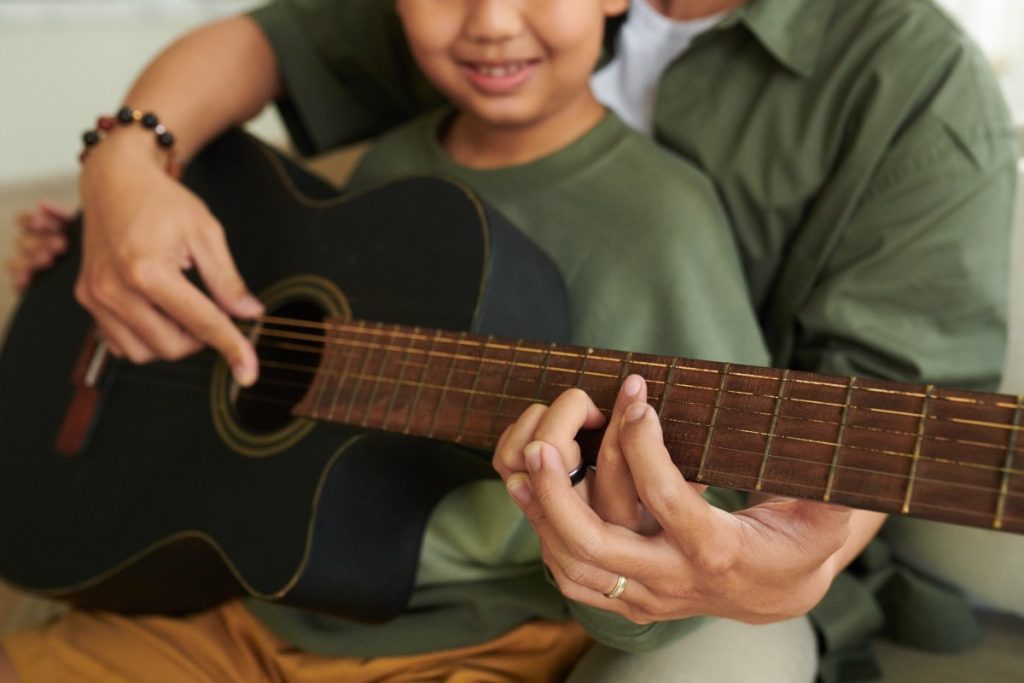
Using technology can also be a game-changer. There are numerous apps and video tutorials available that make learning both interactive and fun. These tools can complement traditional lessons by allowing kids to practice at their own pace and in a way that feels more like play than work.
Celebrating small victories and setting achievable goals can make the learning process rewarding and prevent frustration. Over time, with patience and consistent effort, most children can overcome the initial hurdles and find joy in making music with their guitar.
Adaptive Teaching Strategies
For young guitar learners who face challenges such as short attention spans or difficulty in building finger strength, adaptive teaching strategies are essential. Teachers can tailor lessons to be more interactive and dynamic, using visual aids and physical activities that help reinforce musical concepts and techniques. For example, incorporating color-coded strings can make learning chords easier, while simple finger exercises can be turned into fun competitions to build strength and dexterity.
Games that mix music theory with play are also beneficial. These can include rhythm matching games, musical quizzes, or apps that gamify learning progress. Such methods not only make the learning process enjoyable but also help maintain the child’s interest and enthusiasm over longer periods.
Patience and Persistence: Keys to Musical Mastery
The journey to becoming proficient at guitar requires patience and persistence, not just from the students, but from parents and educators as well. It’s important to set realistic expectations and understand that progress in music, as in any skill, does not happen overnight. Regular encouragement and positive reinforcement can help children push through periods where they feel like they’re not improving.
Encouraging children to stick with their practice can be as simple as setting small, achievable goals and celebrating when they meet them. This approach helps build a sense of accomplishment and a positive association with music learning. It’s about showing them that persistence pays off, and that each little step forward is worth celebrating.
Exploring Guitar in Dubai: A Thriving Hub for Young Musicians
For parents looking to introduce their kids to music, guitar Dubai options are abundant, offering a range of high-quality lessons tailored to young learners. With world-class music academies, experienced instructors, and a vibrant musical community, Dubai is a fantastic place for children to develop their passion for the guitar. Whether enrolling in structured lessons or joining local jam sessions, young musicians in Dubai benefit from a nurturing environment that blends tradition with modern teaching techniques, making learning the guitar an exciting and rewarding experience.
Conclusion
Guitar lessons offer more than just music education for kids. They provide a foundation in discipline, boost cognitive abilities, and foster social skills that extend well beyond the music room. For parents and educators looking to enrich a child’s life through music, the guitar is a fantastic tool due to its versatility and the unique advantages it offers.
If you’re considering guitar lessons for your child or your students, remember that the right approach and a supportive environment can make a significant difference. So why not pick up a guitar and see where this musical journey can take your young learner? Encourage them to strum their first chord today, and watch as they develop a lifelong love for music.