
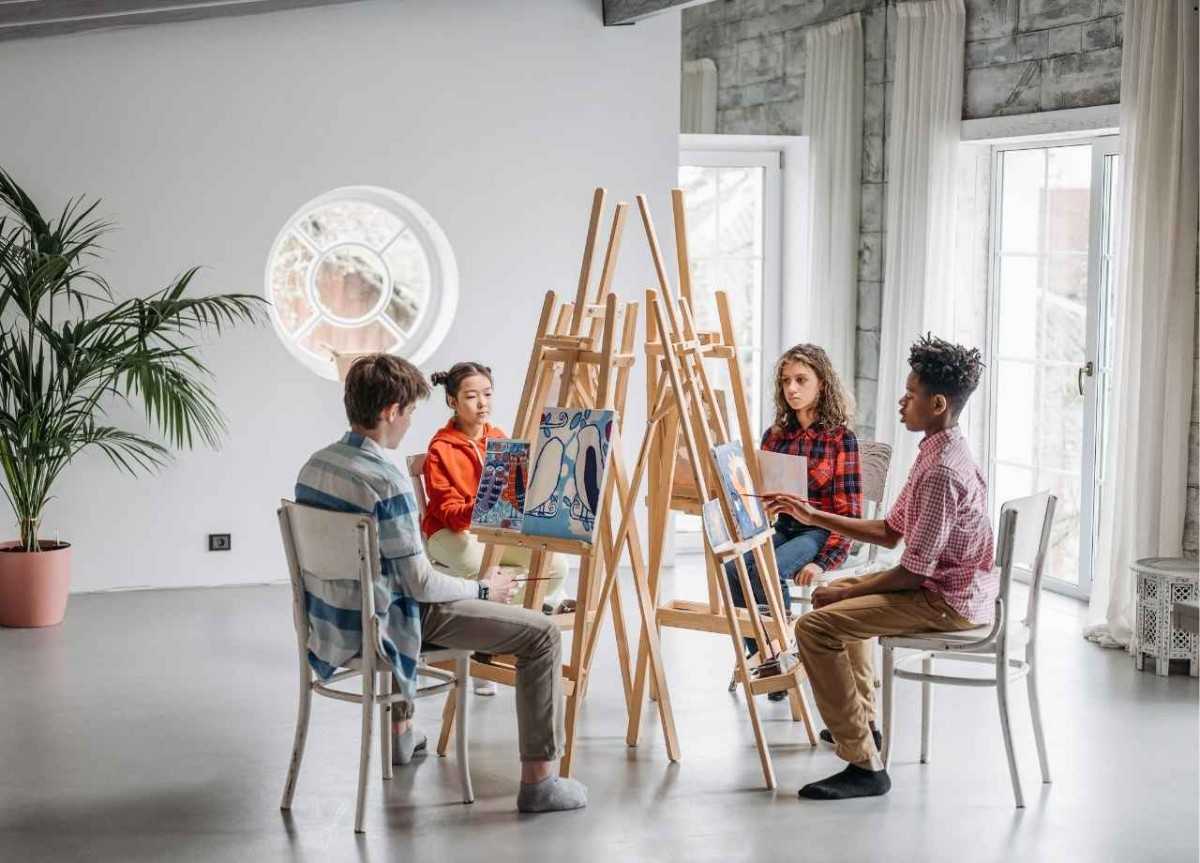
Arts and crafts are more than just time fillers for children. They play a significant role in helping kids develop a range of skills that benefit them not only in school but also in life. Whether it’s a toddler sticking shapes onto paper or a preteen building a model airplane, these activities are key to cognitive, physical, and emotional growth. Here’s why they matter so much.
The Benefits of Arts and Crafts for Kids
Cognitive Development
At first glance, a child painting might just seem like a fun activity to pass the afternoon. But look deeper and you’ll see a child making decisions about which colors to choose, figuring out how to solve the problem of a brush that won’t quite reach into a tiny corner, and planning out their work steps. Arts and crafts boost creativity, offering kids a chance to express themselves and think outside the box. These activities require them to recall shapes and colors, processes which enhance memory skills. They also teach children to focus on a task for an extended period, improving their attention to detail and ability to concentrate.
Moreover, when a child engages in crafting, they’re learning to interpret and follow instructions, which are essential skills in any educational or work setting. This not only helps with understanding complex ideas but also with executing tasks effectively. The act of transforming materials into art or a craft project provides a unique sense of accomplishment, boosting their confidence and willingness to tackle new challenges.
Physical Skills
It’s easy to overlook the physical benefits of arts and crafts. However, these activities are instrumental in developing fine motor skills. As children manipulate paper, scissors, and glue, they refine their dexterity and hand-eye coordination. These are the same skills needed for handwriting, tying shoes, and other essential activities.
Crafts often involve a variety of movements such as cutting, drawing, painting, and assembling, which are all excellent for enhancing fine motor prowess. For younger children, these activities are crucial as they learn to control their hand movements and gain strength in their hands and fingers. The repetitive actions involved in crafting, like cutting along lines or assembling beads, reinforce muscle memory, which is fundamental in developing steady and controlled motions.
Emotional and Social Growth
Crafting can be a peaceful, therapeutic activity that allows children to relax and express their feelings through their creations. This emotional exploration is significant as it can help children manage their emotions and cope with different situations. Participating in arts and crafts can also reduce anxiety and promote a sense of calmness.
Moreover, when children work on crafts together, they’re learning valuable social skills. They learn to share resources, take turns, and collaborate on ideas. These interactions foster teamwork and communication skills, which are crucial for their overall social development. By working with others, children learn about respecting different viewpoints and solving conflicts constructively. This shared creativity also strengthens friendships and builds a sense of community among peers.
Age-Appropriate Arts and Crafts Ideas
Crafting projects can and should be tailored to match the developmental stages of children. What works for a toddler won’t necessarily hold the attention of a ten-year-old, nor will it challenge them appropriately. Here’s a breakdown of arts and crafts activities suited for different age groups.
Toddlers (Ages 1-3)
At this stage, children are just beginning to explore their world. Activities for toddlers should focus on simplicity and sensory experiences. Think about projects that let them mess around with large pieces they can easily grasp with their little hands. Using safe, non-toxic materials like large crayons, finger paints, and water-soluble markers are great options. These activities help toddlers develop their color recognition skills and allow them to experience textures. Simple crafts like sticking colorful paper onto pre-drawn shapes can also be very engaging. They help toddlers practice their hand-eye coordination while they learn about different shapes and colors.
Preschoolers (Ages 4-5)
Preschoolers are a bundle of energy and curiosity. They can handle slightly more complex tasks than toddlers. This age is perfect for introducing crafts that involve more steps and require more precision, which aids in refining their fine motor skills. Activities like stringing beads, cutting out shapes with safety scissors, and assembling basic puzzles fit well. These crafts help them learn to follow directions and understand sequences, which are foundational for mathematical thinking and reading skills.
Creating simple gifts or crafts that can be used in play, like masks or hand puppets, gives them a product they can use, which boosts their sense of achievement and pride in their work. Additionally, using crafts to introduce and reinforce academic concepts such as numbers, letters, and simple words can make learning these new ideas more engaging and less intimidating.
School-Age Children (Ages 6-12)
Children in this age group are capable of handling projects that involve multi-step processes and that challenge their problem-solving skills. They can start to work with more diverse materials like clay, fabric, or more advanced craft kits. Projects like building model kits, sewing simple patterns, or even more complex paper mache sculptures are ideal. These activities not only foster creativity and concentration but also encourage perseverance and patience as they work through more challenging projects.
Crafts at this stage can also become more interdisciplinary, incorporating concepts from science, technology, engineering, and math (STEM), such as building a simple robot from a kit or creating a small garden. These projects help children understand how things work and see the practical applications of the concepts they learn at school.
Tips for Setting Up a Crafting Space at Home
Having a designated area at home for arts and crafts can significantly enhance a child’s interest and engagement in creating. It doesn’t need to be large-a corner of a room or a small table will suffice. The key is to make it accessible, inviting, and organized.
Creating a Designated Craft Area
First, ensure the space is safe and kid-friendly. Avoid sharp tools within easy reach and ensure all materials are non-toxic. Setting up the area at their height, with easy-to-reach supplies, allows them the freedom to create whenever the mood strikes, fostering independence in their crafting adventures.
Essential Tools and Materials
Stock the area with basic supplies like scissors, glue, markers, colored paper, and clay. Keep these materials organized in clearly labeled bins or drawers. This organization not only makes it easier to find what they need but also helps teach children to put things away after they’re done. Adding a variety of materials over time keeps them interested and excited about new possibilities.
Keeping the Space Organized and Safe
It’s important to keep the crafting area tidy and structured. Regular checks to remove dried-out markers or empty glue bottles help maintain the usability of the space. Also, providing a place for everything and encouraging children to clean up after each crafting session promotes responsibility and care for their environment.
How to Make Arts and Crafts an Enjoyable Routine
Integrating arts and crafts into daily life can be a wonderful way to enrich your child’s everyday routine. It encourages creativity and gives them a regular outlet for expression. Here are some ways to make arts and crafts a staple part of your child’s life, keeping it fun and engaging for everyone involved.
Incorporating Arts and Crafts into the Daily Routine
The key is to make arts and crafts as routine as mealtime or bedtime. This could be setting aside time after school or after dinner for a little creative work.
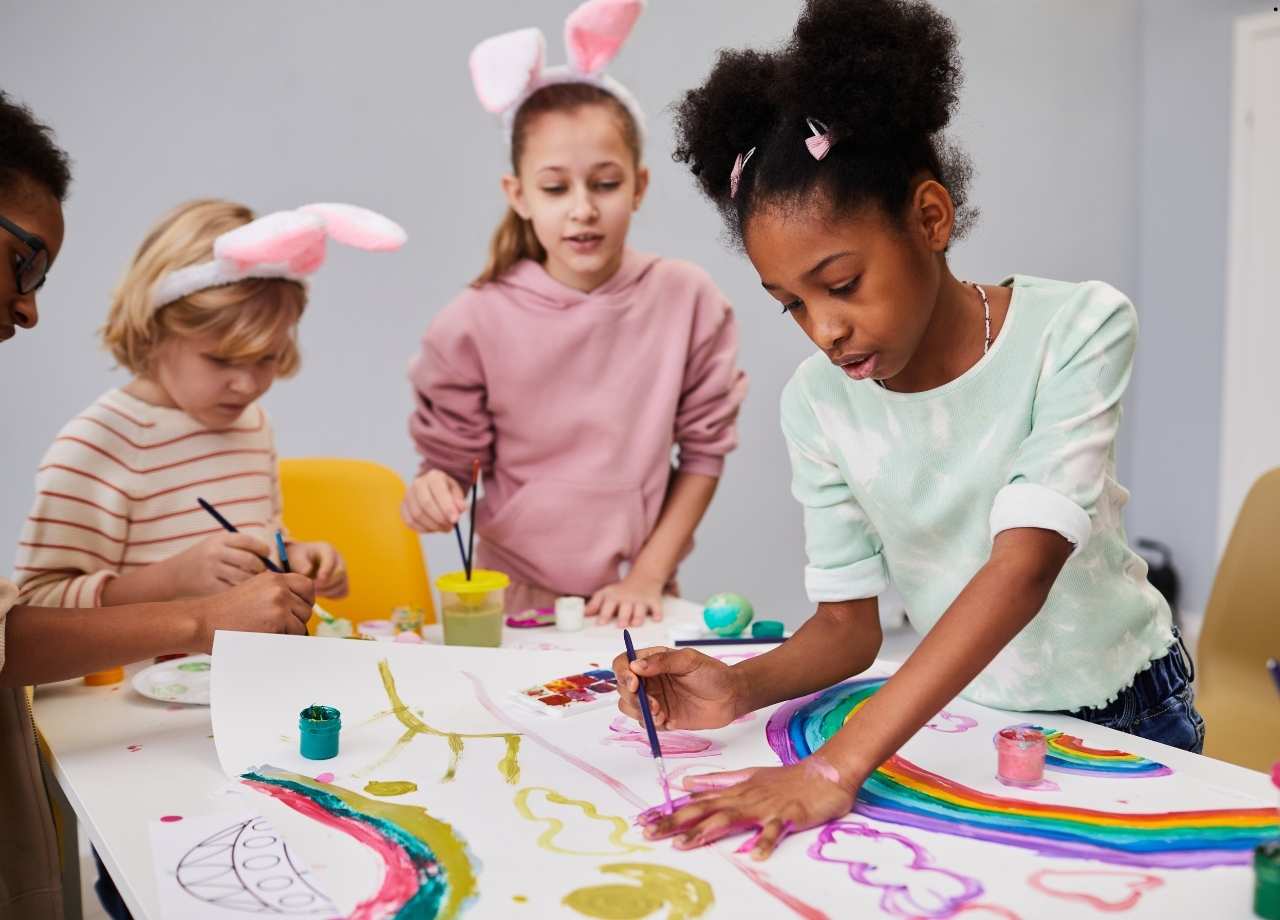
It doesn’t have to be long; even 20 minutes will suffice. The regularity of the activity helps children look forward to it and builds it as a habit, not just an occasional pastime.
Ideas for Seasonal and Holiday-Themed Projects
To keep the momentum going and to inject some excitement into the craft sessions, plan for seasonal crafts. For example, making ornaments or greeting cards during the holiday season, or decorating pumpkins in the fall. This not only ties the crafts into something tangible they see around them but also helps children understand and connect with the cultural significance of various celebrations.
Tips for Engaging Reluctant Crafters
Some children might not jump at the chance to sit down and make things. For these kids, it’s important to find out what they are interested in. Perhaps they like dinosaurs, cars, or fairies. Use these interests as a springboard for crafting projects. You can also rotate the types of activities you do, mixing in painting, building, or even outdoor nature crafts, to keep things interesting and cover a broader range of interests and skills.
Making arts and crafts enjoyable for every child means being patient and letting them explore at their own pace. If a project doesn’t hold their interest, it’s okay to switch it up. The goal is to make the process enjoyable, not just the end product.
Arts & Crafts At The Ballet Centre
For parents looking to nurture their child’s creativity, The Ballet Centre Dubai offers an exceptional environment to explore arts and crafts. With programs specifically designed for kids of all ages, the center provides a structured yet inspiring space for children to experiment with different materials and techniques. Their experienced instructors not only guide children in crafting but also encourage self-expression, problem-solving, and collaboration.
Conclusion
Arts and crafts are more than just a way to pass the time; they are a vital part of developing a well-rounded, creative, and capable young person. By weaving these activities into your child’s daily life, you’re not only giving them the tools to explore their creativity but also helping them develop a multitude of skills that will benefit them across all areas of life. So, grab some glue, pick up some paper, and get crafting! Your child’s next masterpiece could be just a craft session away.