taekwondo kicks

Everything you need to know about Taekwondo Kicks

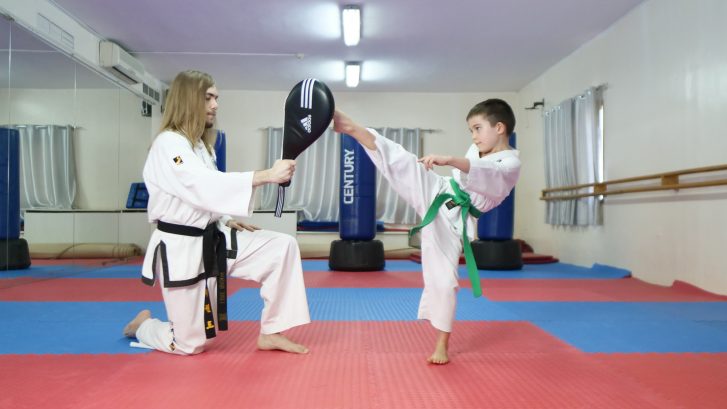
In Taekwondo, kicks are an important part of the art. They are one of the most visible and powerful techniques available to us. To become a well-rounded martial artist, it is important to learn how to use your kicks effectively during sparring and self-defense situations.

There are many different types of kicks that you will learn in our Taekwondo classes in Dubai.

Front snap kick:

The most common and basic kick is the front snap kick. This kick is performed by snapping your leg out straight in front of you while keeping your heel tucked in close to your body. This kick is used to strike an opponent in the stomach, chest, or head.

Side kick:

Another common kick is the side kick. You kick out to the side with your leg while keeping your heel tucked in close to your body. This kick is used to strike an opponent in the ribs or kidneys.

Roundhouse kick:

Another Taekwondo kick used in sparring and self-defense is the roundhouse kick. The kick is executed by swinging your leg around in a circular motion and then snapping it out straight, hitting your opponent with the ball of your foot. This kick can be used to strike an opponent in the head, stomach, or chest.

Spinning back kick:

The spinning back kick is another commonly used kick. During this kick, you spin quickly and then snap your leg out straight behind you, striking your opponent with the ball of your foot. A kick like this can be used to strike an opponent in the head, the stomach, or the back.

Flying side kick:

The flying side kick is often used in demonstration performances. In this kick, you jump into the air and kick out to the side with your leg while keeping your heel tucked in close to your body. 

Outside crescent kick 

This kick is a variation of the inside crescent kick. You will start in the same position as the inside crescent, but your kicking leg will be on the outside of your body. Again, you will snap your kicking leg out and around in a crescent motion, using the ball of your foot to make contact with your opponent. This kick can be used to strike an opponent in the head, stomach, or ribs.

Axe kick:

Axe kick is when you jump into the air, bring your leg down in a chopping motion, then strike your opponent with the inside of your heel. This kick can be used to strike an opponent in the head, neck, or shoulders.

How Do I Improve My Taekwondo Kicks?

The best way to improve your Taekwondo kicks is to practice, practice, practice! Try to find a training partner to help you work on your techniques. You can also try using a kicking target or a heavy bag to help perfect your kicks. Remember to focus on accuracy and power when you are practicing your kicks. You can execute your kicks with precision and force with time and practice.

What Exercises Make You Kick Harder?

A few exercises can help you develop more power in your kicks. Try doing some squats, lunges, and calf raises to strengthen your legs. You can also try doing plyometric exercises, such as jump squats and box jumps, to help improve your explosive power. Remember to warm up thoroughly before you do any of these exercises and to cool down and stretch afterward.

What Is The Hardest Kick In Taekwondo?

There is no definitive answer to this question, as everyone may have a different opinion. Some people may say that the flying side kick is the hardest in Taekwondo, while others may say that the spinning back kick is the most difficult. Ultimately, it comes down to personal preference and opinion. What one person finds easy to execute, another person may find more challenging.

taekwondo uniform guide

Taekwondo Uniform buying guide

The importance of uniforms in martial arts is not just about looking good. It also has much to do with the discipline and respect you show while wearing it. For example, the uniform is very important for Taekwondo classes because it shows your rank and level within the art. As you progress through the ranks, you will be given different colored belts to wear, which signify your rank. The higher your rank, the more elaborate and colorful your belt will be.

Ten things to remember when buying a Taekwondo uniform:

  1. Make sure the uniform is comfortable and allows a full range of motion.
  2. Choose a fabric that is breathable and will wick away moisture.
  3. Look for a uniform that is easy to care for and can be machine-washed.
  4. Avoid uniforms with excessive embellishments or logos.
  5. Make sure the uniform fits well and is not too loose or tight.
  6. The uniform should be constructed of durable materials lasting through multiple washes.
  7. The color of the uniform should be appropriate for the style of Taekwondo you are practicing.
  8. Choose a uniform style appropriate for your level of experience.
  9. Make sure the cost of the uniform is within your budget.
  10. Ask your instructor for recommendations on where to purchase a uniform.

How to buy a Taekwondo uniform for your kids?

When you are looking to buy a Taekwondo uniform for your kids, there are a few things that you need to keep in mind. The first thing is to ensure that the uniform fits well and is not too loose or tight. The second thing is to choose a durable material that can withstand multiple washes. And finally, you need to ensure that the uniform is comfortable for your kids.

With these things in mind, here are a few tips on how to buy a Taekwondo uniform for your kids:

Ask around and get recommendations from other parents. If you know other parents who have kids in Taekwondo, they would be a great resource for finding the right uniforms for your kids. Ask them where they bought their uniforms and what their experience was like.

How to choose the right size?

The best way to determine what size uniform you need is to try it on before you buy it. Most martial arts stores will have a few different sizes of each type of uniform available for you to try on. If you are ordering online, consult the size chart before making your purchase. You generally want the uniform to be snug but not too tight. It should allow you to move freely and breathe easily.

What is the right color?

The color of your uniform will depend on the style of Taekwondo you are practicing. For example, in traditional Taekwondo, beginner students typically wear white. As you progress through the ranks, you may be able to wear a black uniform. Athletes typically wear a red or blue uniform in other styles of Taekwondo, such as WTF Taekwondo.

How much should I spend?

The cost of a Taekwondo uniform can vary depending on the quality of the materials and the brand. Generally, you can expect to spend anywhere from $30 to $100 on a good quality uniform. If you are starting, spending a lot of money on a high-end uniform is unnecessary. As you progress in your training, you can upgrade to a better quality uniform if you wish.

Taekwondo Gear:

Following are some basic taekwondo gear that you would need to get started with your training:

  1. A Taekwondo uniform ( Dobok): As mentioned before, the color of your uniform will depend on your style of Taekwondo. For traditional Taekwondo, beginner students typically wear white while more advanced students wear black. In WTF taekwondo, red and blue are the colors worn by athletes.
  2. A mouthguard: This is to protect your teeth and gums from getting injured during training or sparring.
  3. A groin cup (for men): This is to protect your groin area from kicks and punches.
  4. A chest guard: This is to protect your chest and ribs from impact.
  5. Shin guards: These are to protect your shins from kicks.
  6. MMA gloves: These can be used for sparring or training with a punching bag.
  7. Focus mitts: These are used by a partner to help you practice your punches and kicks.
  8. A skipping rope: This is a great tool for improving cardiovascular endurance.
  9. A yoga mat: This can be used for stretching or ground exercises.
  10. An MMA training bag: This can be used for storing all of your taekwondo gear in one place.

These are just some of the basic taekwondo gear you need to start your training. As you progress in your taekwondo journey, you may need or want additional gear. However, these are the essentials that you will need to get started.

taekwondo exercises

Taekwondo training exercises – A brief Overview

Taekwondo is a sport that involves a wide range of exercises designed to increase strength, flexibility, and agility. 

Here are some of the most common taekwondo training exercises that you will do as part of Taekwondo training:

Punching drills: These drills help to improve your punching technique and power. Focus on proper form and aim for a specific target.

Kickboxing drills: Kickboxing drills help to improve your kicking technique and power. Again, focus on proper form and aim for a specific target.

Speed drills: Speed drills help to improve your reflexes and speed. Try to move as quickly as possible while still maintaining proper form.

Agility drills: Agility drills help to improve your coordination and balance. These drills often involve quick changes of direction.

Flexibility exercises: Flexibility exercises help to improve your range of motion. Try to perform these exercises regularly to prevent injury.

Taekwondo training is not only about physical exercise. It is also important to focus on mental training. This can be done through meditation, visualization, and positive thinking. Mental training will help you focus during competition and remain calm under pressure.

Martial Arts Strength Workouts for Explosive Power

Taekwondo isn’t just about technique—it’s about explosive power. The right strength exercises can transform your kicks from good to knockout-level. Unlike generic gym workouts, martial arts strength training focuses on functional movements that mirror combat actions. Here’s how to train like a champion:

Key Strength Exercises for Taekwondo Athletes

  1. Plyometric Push-Ups
    • Why? Builds punching power by engaging chest, triceps, and core explosively.
    • Pro Tip: Clap between reps to train fast-twitch muscles.
  2. Bulgarian Split Squats
    • Why? Isolates leg strength for higher, more controlled kicks (especially roundhouse and side kicks).
    • Pro Tip: Hold dumbbells to increase resistance.
  3. Hanging Leg Raises
    • Why? Strengthens hip flexors and core—critical for snapping kicks quickly back to stance.
  4. Medicine Ball Throws
    • Why? Mimics the kinetic chain of a punch or kick. Improves rotational power.

Sample Martial Arts Strength Routine
*(3x/week, paired with technique training)*

  • Warm-Up: 10 min dynamic stretching (high knees, leg swings)
  • Circuit (3 rounds):
    • Plyo Push-Ups x 12
    • Bulgarian Split Squats x 10/leg
    • Hanging Leg Raises x 15
    • Medicine Ball Slams x 20
  • Cooldown: 5 min hip mobility stretches

The Science Behind Martial Arts Strength Workouts

Taekwondo demands eccentric strength (controlled deceleration) just as much as power. For example:

  • Kicking: Requires quadriceps to extend the leg and hamstrings to retract it swiftly.
  • Punching: Relies on lats for pulling back strikes and core to transfer force.

Which Muscles Are Important for Taekwondo Training?

The following muscles are important for taekwondo training:

Quadriceps: These are the large muscles on the front of your thighs. They are important for kicking.

Hamstrings: These are the large muscles on the back of your thighs. They are important for kicking.

Gastrocnemius: This is the large muscle on the back of your lower leg. It is important for jumping and balance.

Iliopsoas: This is a large muscle that runs from your lower back to your hip. It is important for kicking.

Rectus abdominis: This is the muscle that gives you the “six-pack .”It is important for balance and stability.

Latissimus dorsi: This is a large muscle on the back. It is important for punching and kicking.

Deltoids: These are the large muscles on the sides of your shoulders. They are important for punching.

Triceps: These are the large muscles on the back of your upper arms. They are important for punching.

Biceps: These are the large muscles on the front of your upper arms. They are important for punching.

Pectorals: These are the large muscles on the front of your chest. They are used for punching.

As you can see, there are a lot of muscles involved in taekwondo training. It is important to focus on all of these muscles when exercising. This will help you to improve your performance and prevent injury.

Eight Best Exercises for Taekwondo Training

Take your Taekwondo skills to the next level with these six essential exercises.

Push Ups: Push-ups are a great way to build upper body strength. They will also help you to develop better punching power.

Sit Ups: Sit-ups are a great way to build core strength. A strong core will help you maintain balance and stability during your Taekwondo training.

Squats: Squats are a great way to build lower body strength. They will also help you to increase your kicking power.

Lunges: Lunges are a great way to build lower body strength and improve your balance.

Jumping Jacks: Jumping jacks are a great way to increase your heart rate and improve your cardio conditioning.

Shadow Boxing: Shadowboxing is a great way to improve your punching and kicking technique. It will also help you to develop better speed and timing.

Pull ups:  Pull-ups are a great way to build upper body strength. They will also help you to develop better punching power.

Planks: Planks are a great way to build core strength. A strong core is essential for maintaining balance and stability during your Taekwondo training.

Best Exercises for Balance

Balance is an important part of Taekwondo training. These exercises will help you to develop better balance and coordination.

Single-Leg Balance: Stand on one leg and hold the position for 30 seconds. Repeat with the other leg.

One Leg Squats: Start by standing on one leg. Bend your knee and lower your body into a squat position. Hold the position for 30 seconds and then repeat with the other leg.

Side Planks: Lie on your side and prop yourself up with your elbow. Hold the position for 30 seconds and then repeat on the other side.

The Best Workout for Kicks

Kicks are the most important part of Taekwondo training. The following exercises will help you to develop better kicking power and technique.

Squats: Squats are a great way to build lower body strength. They will also help you to increase your kicking power.

Lunges: Lunges are a great way to build lower body strength and improve your balance.

Kicking Drills: Kicking drills are a great way to practice your kicks and develop better techniques.

Jump Squats: Jump squats are a great way to build lower body strength and explosive power.

Final Thoughts

Taekwondo training is a great way to improve your fitness and develop self-defense skills. These exercises will help you to build strength, power, and coordination. Add them to your workout routine and see the results for yourself!

Taekwondo Blackbelt: How long does it take?

Taekwondo is a difficult and physically demanding martial art. Training requires dedication, focus, and above all else, a lot of time. It can sometimes be stressful for new Taekwondo students to wonder how long it will be before receiving the highest rank.

Although it may seem like an eternity to the dedicated student, you must keep in mind that the road to the black belt isn’t measured by months or years. It takes time to develop physical ability, mental capacity, and discipline. Patience goes a long way not only during training but also in achieving one’s goals! It takes time to become proficient at any physical activity. 

Olympic athletes train for countless hours before they win gold. Imagine how many years it took them to perfect their form, not only physically but also mentally. Imagine all of the “off-days,” injuries, and even bad coaches that set them back from their lofty goals. 

Most students won’t earn their first black belt until they are at least 16 years old unless they’ve been training since childhood. Let alone one with the word “Master” on it.

Taekwondo Black Belt Levels:

The first belt of Taekwondo is white, then yellow, green, blue, red, and then black. There are nine levels or degrees of black belts. 

1st Dan Black Belt – This is the basic black belt.

2nd Dan Black Belt – This can be obtained after one year of practicing as 1st Dan.

3rd Dan Black Belt – The rank can be attained after practicing as a 2nd Dan Black Belt for two years.

4th Dan Black Belt – A 3rd Dan Black Belt can achieve this after three years of practice.

5th Dan Black Belt – Generally, a 4th Dan Black Belt needs to practice for four years before getting the Master status.

6th Dan Black Belt – Attained by a 5th Dan Master after practicing for five years.

7th Dan Black Belt – Achievable after 6 years of training as a 6th Dan Master.

8th Dan Black Belt – You are now a Grand Master. This can only be achieved after 7 years of practicing as 7th Dan.

9th Dan Black Belt – Achieved after eight years of being a practicing 8th Dan Grandmaster.

The first black belt is the easiest to achieve. However, as anyone who has earned a black belt will tell you, it’s also one of the hardest. Many student train for years and still lack the mental maturity necessary for black belt. The black belt is more than just a belt. It’s a mental state, achieved only through hard work and dedication.

Is There A 10th-Degree Black Belt In Taekwondo?

Black belts who have influenced or impacted the development of Taekwondo are given the honor of holding the 10th Dan black belt. They are sometimes known as the Founders of Taekwondo or Father of Taekwondo. Among them is Jhon Rhee, a 10th-degree black belt who established Korean martial arts in the U.S.

How Good Is A Black Belt In Tae Kwon Do?

Upon earning a black belt, a student has proven themselves to be proficient in the basics of Tae Kwon Do, capable of applying those skills under pressure, and have reached a level of spiritual maturity. A good analogy is this: It takes time to build muscle but only a moment to tear it down. To accomplish the necessary tasks set before them at the black belt, the students must condition themselves mentally and physically to withstand the pressure of performing techniques.

Mental Conditioning:

Black belts can implement techniques in stressful situations such as fighting for one’s life or when time is not on their side. They’ve learned to focus and channel their energy to be effective.

Physical Conditioning:

Students will train their muscles to execute kicks and punches with high speed, power, and control. They may even learn advanced techniques such as jumping or spinning kicks. 

Taekwondo Classes For Beginners:

It might seem strange to discuss beginner classes in an article about black belts. However, a journey of a thousand miles begins with the first step. The first step is to enroll yourself or your child in a beginner’s class.

At the beginner level, students will learn kicks, punches, and blocks that are most often seen in Tae Kwon Do tournaments. They’ll also learn how to fall or roll properly to prevent injuries. The most important thing for beginners is to have fun! Learning an art form takes time, dedication, and, yes, money. So, it’s important not to get so caught up in the belt system that students forget why they began practicing.

Unlocking the Life Lessons Through Taekwondo:

The path to the black belt is a road filled with important life lessons. Each step along the way helps build character, teaching students about resilience, humility, discipline, and dedication. As such, the black belt isn’t just an indication of technical proficiency, but also of a well-rounded individual who has been molded by the teachings of Taekwondo.

In times of frustration or difficulty, remember that each training session, each small achievement, and even each setback, is a stepping stone on your journey to mastery. Embrace the lessons, celebrate the little victories, and push through the hardships. For it is these experiences that will not only lead you to the black belt but also equip you to face the various challenges of life.

The Psychological Significance Of Each Belt Color:

It’s important to mention that the colors of the belts in Taekwondo are not arbitrary. Each color symbolizes a certain stage of growth.

The white belt, for example, represents purity and innocence, just like a beginner without prior knowledge of Taekwondo. Yellow represents the earth, where the seed of knowledge begins to sprout. Green symbolizes a plant’s growth as Taekwondo skills begin to develop. Blue represents the sky, a goal the plant aims to reach as it matures into a tree, just like the student aims to reach their full potential. The red belt symbolizes danger and cautions the student to control their power. Lastly, black represents maturity, self-control, and the calm readiness for any challenge that lies ahead.

Understanding these meanings brings another layer of depth to your Taekwondo journey and can inspire you in your continuous quest for mastery and differs from other forms of martial arts.

The Role Of The Taekwondo Instructor:

The journey to the black belt is not one that can be walked alone. Behind every successful Taekwondo student is a dedicated instructor, who guides, pushes, and supports the student throughout their journey.

Instructors are not only responsible for teaching Taekwondo techniques but also instilling discipline, integrity, perseverance, and respect. They monitor a student’s progress, identify their strengths and weaknesses, and adapt their teaching approach to cater to each individual’s needs. They serve as a source of inspiration and are a testament to what can be achieved through relentless determination and dedication.

Is Becoming A Black Belt A Long-Term Process?

It takes approximately 3 – 5 years of dedicated training to earn the first level. It would take years to reach the 9th level. The journey is more important than the destination. You will enjoy the journey if you can appreciate and cherish small improvements and accomplishments.

What is the best martial art for mindfulness?

Mindfulness can be described as the practice of bringing focus, intention, and awareness into whatever thoughts are arising in the present moment. This simple definition, when taken seriously, can have remarkable effects on our everyday waking experience. Mindfulness allows us to live more fully in each moment than if we were simply on “autopilot.”

Practicing mindfulness can help you reduce stress, increase productivity, and even make you nicer to be around!

Importance of Mindfulness for kids:

Following are just some benefits of practicing mindfulness for kids:

  • Improved academic performance
  • Stress reduction and emotional regulation
  • Increased empathy and “people skills.”
  • Healthier relationships with friends and family
  • Enhanced creativity and problem-solving ability
  • A more positive sense of self.
  • Prevention of Mental Disorders:  Recent research has shown that mindfulness practices might help prevent mental disorders such as depression, anxiety, and stress.

How Martial can arts training help with mindfulness?

In my many years studying and offering TaeKwondo classes in Dubai, we have found that the formal practice of mindfulness is emphasized in certain types of martial arts more than the others. It seems to be a common-sense assumption that anyone determined enough to master specific technical skills must also be at least a bit mindful.

It so happens that Taekwondo has been one of our primary martial art practices for the past ten years. As a result, we have found many ways of combining Taekwondo training with mindfulness practice. This combination can improve both aspects and make you enjoy practicing more.

TaeKwondo and Mindfulness:

Let’s start with a short description of the Taekwondo forms, which is one way that we practice mindfulness in our TaeKwondo classes. They consist of prearranged sets of movements. Poomsae are set movements that could be applied to many different attacks or defense situations in Taekwondo.

We work towards the perfection of each specific movement through these sets of movements and try to improve our understanding of how to perform them correctly. We also aim to learn how they fit into Martial concepts such as energy (Kihap), limberness (Keubi), stances (Seogi), and the use of the body as a whole.

When learning TaeKwondo, we often practice by repeating them many times until they become imprinted in our muscle memory. This process is known as Chon-Ji (천지), which means “heaven and earth.” The actual number of repetitions depends on the level of the student but is often between 25 and 100 times.

How can Taekwondo improve focus and concentration?

Many other martial arts often focus on physical conditioning (weight training, push-ups, etc.), and the practitioners of different styles usually emphasize their technique training. That is not a bad thing per se, but it does mean that they often spend less time practicing how to combine their techniques in creative and useful combinations correctly.

The result is usually that they can perform each technique perfectly in isolation but fail when using them together in different situations (i.e., sparring, self-defense, etc.).

On the other hand, Taekwondo focuses heavily on creative combinations of skills. Because of this, most Taekwondo practitioners are far more capable of switching between different techniques to react to changing situations.

This ability to adapt is very much related to the development of mindfulness. Many people often experience their thoughts becoming repetitive and stale when they engage in long periods of concentration by repeating a single activity repeatedly (for example, when they practice a Kata for long periods).

Incorporates Meditation and Breathing Techniques

A fundamental aspect of Taekwondo training that contributes to its effectiveness in promoting mindfulness is the integration of meditation and breathing techniques. These elements often go unnoticed, but they play a significant role in training the mind to be present and focused. Prior to starting a session, many classes incorporate a brief period of meditation to prepare the mind for the physical tasks ahead. This involves sitting quietly, focusing on the breath, and letting go of external distractions. Likewise, throughout training, students are taught to synchronize their movements with their breath, cultivating a rhythm that enhances concentration and control. This practice of ‘conscious breathing’ is a form of mindfulness in itself and can be beneficial in reducing anxiety and promoting a calm, focused state of mind.

Promotes Self-Discipline and Respect

Taekwondo is not merely about the physical activity; it also instills valuable life principles such as self-discipline and respect. These are not only applicable to the training dojo but extend to everyday life. The act of bowing to the instructor and fellow students, for instance, instills a sense of respect for authority and peers. The need to arrive on time, listen attentively, and follow instructions fosters self-discipline. Moreover, the concept of delayed gratification is inherent in the grading system, where students have to demonstrate proficiency and commitment over time to earn their next belt. These principles serve as mindfulness practice, encouraging the students to be present, respectful, and disciplined in their actions and thoughts.

Enhances Cognitive Functions and Emotional Well-being

Aside from the physical and mindfulness benefits, Taekwondo can significantly contribute to improving cognitive functions and emotional well-being. This martial art requires practitioners to remember sequences, techniques, and forms, thereby enhancing memory and cognitive agility. Furthermore, Taekwondo, like other forms of physical exercise, releases endorphins, the body’s natural mood boosters, leading to improved mood, increased happiness, and a reduction in stress and anxiety levels. In the long run, these positive effects on the brain contribute to a mindful way of living, where practitioners are more in tune with their thoughts, emotions, and bodily sensations. This understanding and self-awareness form the crux of mindfulness.

So, what is the best martial art for mindfulness?

Tai Chi is often considered the best martial art for mind & body connection. TaeKwondo is just as good, if not better. It has added advantages such as self-defense and combat training.

It is not an exaggeration to say that every repetitive Kata training session in Taekwondo is a lesson in mindful concentration. Unfortunately, this opportunity to learn how to concentrate is often wasted due to the lack of knowledge about how to do it correctly.

The ability to adapt is very much related to the development of mindfulness. Many people often experience their thoughts becoming repetitive and stale when they engage in long periods of concentration by repeating a single activity repeatedly (for example, when they practice a Kata for long periods).

For this reason, practicing Taekwondo has improved kids’ focus and concentration to a great degree. After they start practicing, they will stop themselves from getting distracted by information or thoughts that are not directly relevant to the task at hand.

When to start learning Taekwondo?

One of the best times to start practicing Taekwondo is in childhood. Of course, it is never too late to start. And if you’re an adult and want to empower yourself with the ability to defend yourself and improve your concentration, then Taekwondo is an excellent choice for you as well.

However, if you start practicing when you are older, it might take longer to see good results.

Like anything else, you will not become truly proficient at it without putting in the time, effort and practice. And the older you are, the more time it will take to learn new skills.

1 2