

It starts with a child standing on stage, arms wide, eyes sparkling, pretending to be a bird, a baker, a queen, or a comet racing through the sky. The audience might be just a few parents sitting on plastic chairs, but in that moment, the child believes the story, inhabits it fully-and something changes. Confidence starts to grow. Self-awareness sharpens. Empathy unfolds.
Drama has a quiet power that doesn’t always get the attention it deserves. It’s easy to think of it as play, and it is. But it’s also something more serious, something deeply valuable. Children who take part in drama classes aren’t just learning how to speak lines or stand in the spotlight-they’re developing tools they’ll use for life.
At Ballet Centre Dubai, drama is offered as part of our performing arts curriculum for children aged 4 and up. We see how the weekly rhythm of improvisation games, script reading, character building, and stage exercises creates steady growth-not just in performance ability, but in emotional and social maturity.
Drama Builds Confidence, Gently
One of the most noticeable changes in children who participate in drama is their posture. Not just physically, but emotionally. They start to take up more space-not with arrogance, but with assurance. They feel seen. They’re heard. That matters deeply, especially for children who are shy or tend to stay quiet in group settings.
Drama allows them to try out voices, roles, and expressions in a way that feels safe and non-judgmental. It’s a rehearsal room, not just for plays, but for life. A nervous seven-year-old who can’t make eye contact in week one might be confidently narrating a story by week six. The shift doesn’t happen overnight, but it does happen.
Communication Gets Real Practice
So much of school life is focused on written communication. Drama gives equal weight to how we speak, how we listen, and how we interpret body language. These are essential life skills, but they’re not always taught directly in traditional classrooms.
In our Trinity drama preparation classes, students work with scripts and monologues, learning how to use tone, timing, and silence. They get comfortable with expression and develop the ability to speak with intention, whether it’s on stage or in a classroom presentation. This kind of training has lasting value far beyond the theatre.
Empathy Finds a Strong Voice
Drama asks children to step into someone else’s shoes and think deeply about how others feel, react, and change. That act-of imagining another’s inner world, builds empathy in a way no lecture or textbook can.
When children take on roles, they are often introduced to lives far different from their own. It stretches their emotional range. They begin to notice subtleties in behavior and motivation. Whether it’s portraying a lonely giant or a mischievous fairy, children learn to feel and express a wide variety of emotions. They become more attuned to the feelings of people around them, both on stage and off.
Drama Encourages Problem-Solving and Creativity
There’s a moment in every group rehearsal where something doesn’t go as planned. A line is forgotten, a prop goes missing, someone freezes. These are not failures-they are opportunities. In drama, children learn to adapt, improvise, and collaborate. They discover how to keep the story going, even when something unexpected happens.
This kind of creative flexibility is hard to teach in theory. It has to be experienced. In our group classes, we often throw in exercises that require quick thinking and teamwork. Children create scenes from scratch, solve staging challenges together, and sometimes even write their own dialogue. It’s playful, yes, but also training for complex thinking and emotional intelligence.
Drama Creates Community
A strong drama class feels like a small family. Children support each other, laugh together, and share the nerves of performance night. They cheer when a friend nails a tricky line and offer comfort when someone forgets theirs.
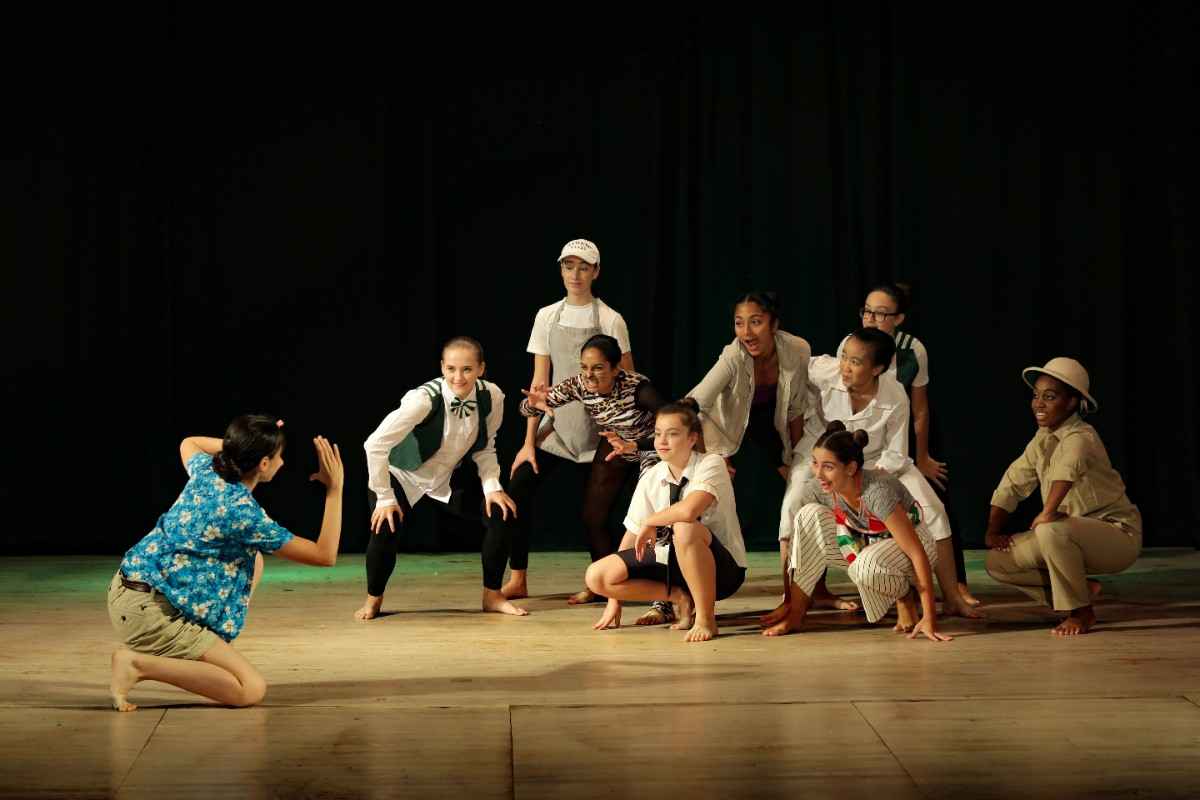
This sense of belonging is important. Not every child finds it in sports or academics. But in drama, there’s room for the loud, the quiet, the silly, the serious. Every personality has a place. We’ve seen friendships form between children who might never have spoken to each other outside of class. There’s something powerful about creating stories together-it builds trust and connection.
Performance as a Milestone
At Ballet Centre Dubai, our drama students participate in showcases and examinations throughout the year, including Trinity College London drama assessments. These are not high-pressure events-they are celebrations of growth. For many children, standing in front of an audience for the first time is a memory that sticks. They feel proud. They feel accomplished. And they often want to do it again.
Parents frequently tell us that drama class has changed how their children carry themselves at school, how they approach group projects, or how they speak to adults. These are small things on the surface, but they point to deeper growth: a stronger sense of self, improved emotional regulation, and the confidence to be seen and heard.
A Safe, Enriching Environment Makes the Difference
Of course, all this growth depends on the atmosphere in which it happens. Drama doesn’t work when it feels like pressure. It flourishes when children feel safe to experiment, to be silly, to make mistakes.
Our drama faculty is experienced, supportive, and encouraging. Classes are structured but flexible, allowing each child to find their rhythm. We welcome beginners and experienced young performers alike. Many of our students also take ballet, modern, or music alongside drama, and the overlap creates a richer artistic experience.
We also offer free trial classes, so families can experience the environment before committing. For those who continue, flexible payment plans and KHDA approval provide additional peace of mind.
Supporting the Whole Child
Drama isn’t just about preparing young actors. It’s about helping children become more expressive, more thoughtful, and more connected. It supports emotional well-being, enhances communication, and encourages creativity-all through the simple act of storytelling and performance.
At Ballet Centre Dubai, we’ve seen how powerful this can be. We’ve watched children step into our studio with hesitation and leave with spark. They don’t just act-they grow.
If you’re looking for a way to support your child’s development in a space that values both artistry and emotional growth, our drama program might be the right step. We’d be happy to welcome you in.