Contemporary vs. Modern Dance: What Sets Them Apart?
Parents often look for dance classes that allow their children to express themselves, build confidence, and develop technical skills. But when exploring options, the difference between contemporary and modern dance can be confusing. While both styles push beyond classical ballet, they have distinct qualities that shape how dancers move, interpret music, and connect with an audience.
Where Modern Dance Began
Modern dance was a bold statement when it first appeared. Ballet had dominated the dance world for centuries, with its precise technique, rigid posture, and storytelling structure. Dancers like Isadora Duncan and Ruth St. Denis wanted something different—movement that felt more natural and expressive. They took inspiration from mythology, nature, and even their own emotions.
Martha Graham took this idea further, developing a technique based on contraction and release. Her movements had a sense of resistance, almost as if the dancer was fighting against an invisible force. Her choreography was dramatic, deeply personal, and often rooted in strong emotions.
Other modern dance innovators, such as José Limón and Merce Cunningham, brought their own ideas. Limón focused on the weight of the body, using breath and suspension to create powerful yet fluid movement. Cunningham took a more experimental approach, introducing chance into choreography and moving away from storytelling.
Contemporary Dance: A Style That Keeps Changing
If modern dance broke away from ballet, contemporary dance blurred the lines between genres entirely. It takes influences from multiple styles, constantly shifting and adapting. This makes it difficult to define in a single sentence.
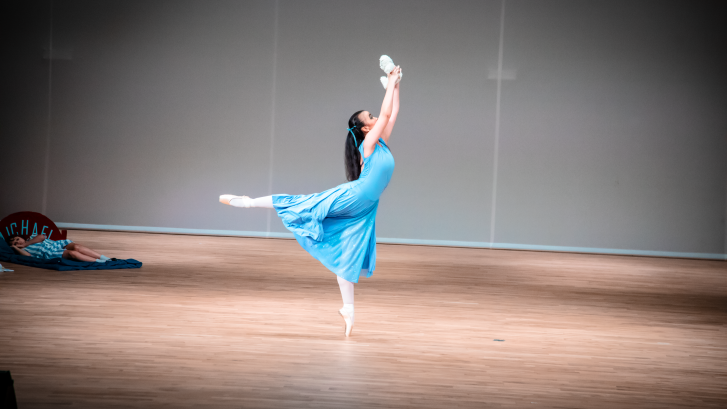
Contemporary dance often looks weightless, with movements that flow seamlessly from one to another. There’s an emphasis on release—letting gravity take over rather than resisting it. Dancers might roll across the floor, spiral through the air, or suspend themselves in unexpected positions. The movement feels organic, as if it’s being discovered in the moment rather than planned.
Unlike modern dance, contemporary choreography isn’t limited by a specific technique. Some choreographers integrate ballet’s precision and control, while others incorporate improvisation and floor work. There’s also a strong influence from jazz, hip-hop, and even martial arts. This makes contemporary dance incredibly diverse, constantly evolving as new influences come in.
The Differences in Training
For students training in modern dance, technique classes focus on strong, grounded movements. They learn contraction and release, fall and recovery, and specific movement qualities unique to different modern dance pioneers. These techniques require control and awareness of weight, making modern dance both physically demanding and artistically expressive.
Contemporary dance training, in contrast, includes a wider variety of movement techniques. A contemporary class might start with ballet-based exercises before transitioning into fluid, full-body sequences. There’s often an emphasis on improvisation, encouraging dancers to explore movement in their own way. Partner work and floor-based movement are also common, allowing dancers to experiment with gravity and momentum.
At Ballet Centre Dubai, students can explore both styles, refining their technique while developing their artistic voice. Our ISTD Modern Dance classes offer structured training in modern technique, giving students a strong foundation in controlled, expressive movement. Meanwhile, our Contemporary Dance classes provide a space for fluidity, creativity, and self-expression, helping students adapt to a range of choreographic styles.
What This Means for Parents Choosing a Dance Class
Parents often wonder which style is best for their child. The answer depends on what the student enjoys.
A child who loves storytelling and dramatic expression might connect with modern dance. The strong, intentional movements and emotional depth can be incredibly rewarding. Modern dance also helps build strength and control, skills that benefit any dance style.
On the other hand, if a child is drawn to free-flowing, expressive movement, contemporary dance might be a better fit. Contemporary allows for more improvisation and creative exploration, making it ideal for dancers who enjoy movement that feels spontaneous and personal.
At Ballet Centre Dubai, we encourage students to try both. Many dancers find that modern technique helps them develop strength and precision, while contemporary classes allow them to experiment and find their own movement style. With our free trial classes, students can explore different options before committing to a class, making it easier to find what resonates most.
The Influence of Ballet on Both Styles
Even though modern and contemporary dance break away from ballet, both styles still draw from its principles. Modern dancers often use ballet’s alignment and control, while contemporary dancers incorporate ballet’s fluidity and grace. Many of the most successful contemporary dancers have strong ballet training, giving them the technical foundation to execute complex movements with ease.

That’s why Ballet Centre Dubai encourages students to build a well-rounded dance education. Our RAD Ballet classes provide the technical training that strengthens all styles, from modern and contemporary to jazz and beyond. A dancer with a strong ballet foundation will have better control, balance, and movement quality, making them more versatile in any genre.
How the Two Styles Appear on Stage
Watching modern and contemporary dance in performance reveals another key difference: their approach to structure.
Modern dance often follows a clear, deliberate composition. The movement may be abstract, but it typically has a defined shape and intention. Dancers might hold strong positions, move with sharp accents, or use repetition to create impact.
Contemporary dance feels more fluid, with seamless transitions and unexpected movement choices. The choreography often embraces unpredictability, playing with speed, levels, and improvisation. Rather than creating structured shapes, contemporary movement explores the body’s full range, often defying traditional dance expectations.
Both styles can be incredibly powerful to watch, offering different kinds of emotional and artistic impact.
Which Style is More Popular Today?
Contemporary dance has become more widely recognized in recent years, partly because of its presence in dance competitions and commercial performances. It’s a favorite among choreographers working in television, film, and music videos because of its adaptability.
Modern dance, while less visible in mainstream media, remains a respected genre within the dance world. Many professional dancers train in modern techniques because of the strength and control they develop through it.
For students at Ballet Centre Dubai, learning both styles provides a well-rounded dance education. Whether they want to pursue dance professionally or simply enjoy the creative process, both modern and contemporary dance offer unique benefits. With experienced instructors, KHDA-approved classes, and a welcoming environment, our centre ensures that every dancer finds their own artistic voice.
Finding the Right Fit
Both modern and contemporary dance encourage personal expression, but they do so in different ways. Modern dance focuses on structure, weight, and intention, while contemporary dance explores fluidity and improvisation. Understanding these differences can help students choose the class that suits them best—or, better yet, try both and discover how each style shapes their movement journey.
At Ballet Centre Dubai, we offer ISTD Modern Dance and Contemporary Dance classes, along with RAD Ballet, jazz, tap, drama, and music lessons. Whether your child dreams of performing on stage or simply wants to enjoy the beauty of movement, we provide a supportive space to grow, learn, and create.